Key takeaways
- Salt air does not dissolve a concrete or terracotta field evenly, like a story people tell at the foreshore.
- Original mortar on 1960s and later Frankston tile is the usual first failure.
- Metal is the second early failure, and on many Frankston roofs it ties with the mortar.
General guidance for Melbourne roofs. The written scope after an assessment decides the work.
The short version
Salt air does not dissolve a concrete or terracotta field evenly, like a story people tell at the foreshore. It sits on the thin, exposed, wettable parts. Ridge mortar opens. Aprons and valley metal pit. Screw washers on any metal wing perish. The tile in the middle of a sound plane is often the last thing to go. Roof Revival Melbourne inspects in that order so Frankston owners are not sold a strip for a bed that needed resetting, or a coat for a flashing that is already lace.
When the tile is still the part that can be saved, the work is roof restoration Frankston. A standard restore often plans around $4,000–$12,000. If the order of failure has reached a crumbling field or wet sarking, replacement commonly starts around $20,000 once measured, and the coat is the wrong spend.
Pointing and beds
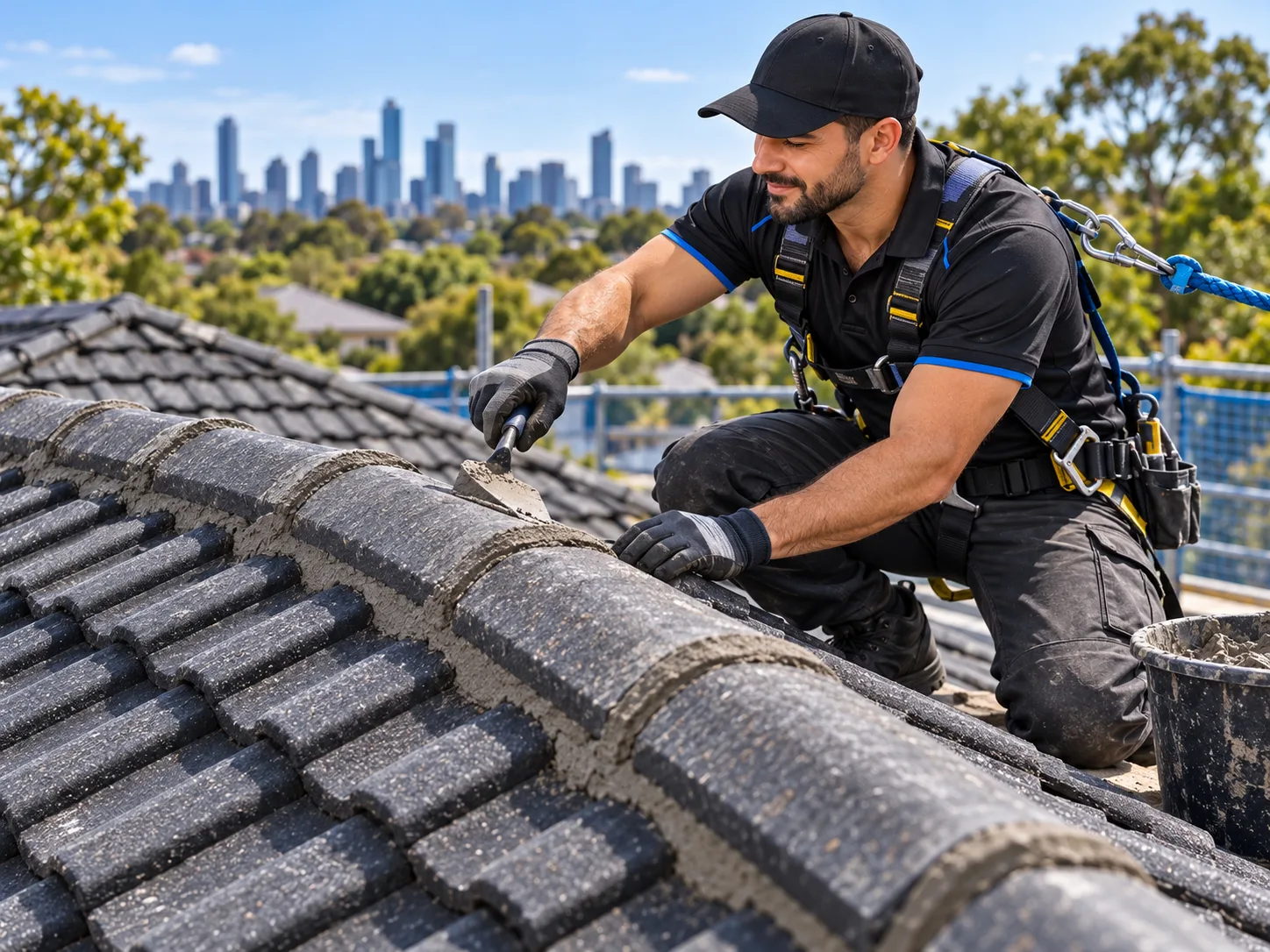
Original mortar on 1960s and later Frankston tile is the usual first failure. Salt and movement powder it faster than the same bed fails in Cranbourne. Caps look seated from the street. The gutter collects dust after a southerly. Water tracks under the ridge and shows up as a hallway stain, which gets blamed on “old tiles” while the field tiles are still hard in the hand. The repair is re-bed and repoint. A flexible smear over powder, or a coating sold as if it sealed the ridge, leaves the path open. Paint is not pointing.
The weather elevation goes first. A foreshore pitch, a Frankston South ridge, an elevated lot with a clear fetch: those beds open while the lee side still looks tidy. An inspection that only walks the front because the driveway is easy will miss the failure that salt actually caused. We look at the hips you cannot see from the letterbox. If only a short run has opened and the rest of the bed is solid, that can be a local repair. If the powder is general, the ridge system is the field job and a single cap is theatre.
Terracotta on elevated houses fails at the same joint, with a coating conversation that concrete does not share. A heavy film on a sound terracotta can look wrong and still leave the bed unfixed if nobody reset it. Concrete can take a specified system after the mechanical work. Neither tile is “salt proof”, and neither is condemned by chalky mortar alone. The mortar is the first sentence. The tile is a later test.
Flashings and valleys
Metal is the second early failure, and on many Frankston roofs it ties with the mortar. Chimney aprons, step flashings, barge and apron details, and valley irons hold salt in the fold. You see crust, then pinholes, then a split. Valley irons also hold leaf from gums and coastal tea tree, so they fail by rust and by blockage together. A blocked valley over dry sarking is a clear-out and, if the iron is holed, a new valley. It is not a new tile roof. A blocked valley over underlay that has rotted is the moment the order of failure has moved past the metal.
Wind drives rain at gable ends and under laps that a calm-site detail never had to survive. A flashing replaced with the same short cover will leak while it is still shiny. Salt is why the old one died. Geometry is why the new one might. Both belong in the notes. Gutter brackets and the outside of gutters rust here too. A holed trough is its own line. Overflow into eaves looks like a tile leak and is often the gutter. We separate them before we talk about the field.
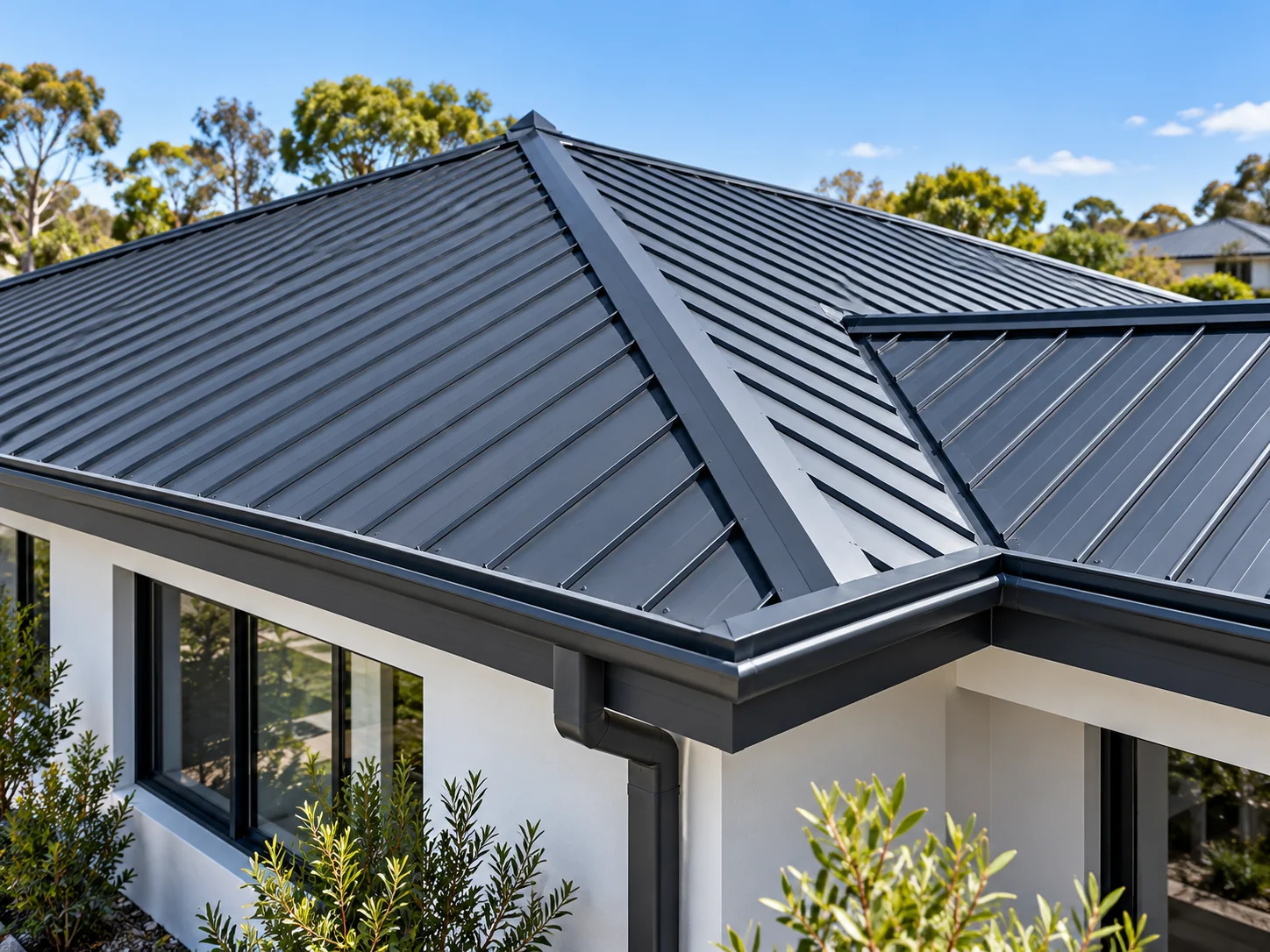
Where a metal extension meets the tile, the fasteners on the sheet often fail before either field does. Dead washers are a repair on the metal. They are not evidence the tiles have finished. The junction flashing between the two is the place the stain usually starts. Fix the junction. Do not average the two materials into one “salted roof” and strip both.
When the tile itself is next
Tiles fail after the details if water and growth were allowed to stay. Lichen holds moisture and salt against the face. On a hard unit that is cosmetic plus a prep issue. On a unit that has been damp for years it becomes fretting, especially at noses and at cuts near valleys. A handful of cracked tiles under trees or along a walking path is still an allowance inside a restore. A band of soft, crumbling units is the field catching up with the details. That is when restoration becomes the wrong job. We lift tiles on the weather face and on the lee face, because they will not match.
Sarking tells you whether the early failures were caught. Dry underlay under a powdered ridge means you are in time for a restore. Wet underlay across bays means the details leaked for long enough to finish the layer a coating cannot replace. Ceiling stains in one room can still be the flashing. Stains in several rooms under different planes usually mean the order has moved on. Age helps as a clue — many Frankston tile roofs are decades into peninsula weather — and age is not the test. A maintained ridge on an older house can outlast a neglected newer one closer to the water.
Previous coatings complicate the order. A film applied over salt and powder can peel while the tile underneath is still sound, which looks like “the tiles are failing” and is often the coating letting go of a dirty, unbedded roof. Or the film can be hiding tiles that were already soft. We do not trust the tale the peel tells. We take a unit up. Read salt and flashings for the metal step, and failed coatings if someone has already painted the symptom.
What to look at before you call
From the ground, in daylight: the ridge on the weather side, any white crust on a flashing, the valley if you can see it, and the ceiling. Do not climb. Say whether granules or mortar dust are in the gutter. Say whether the house faces open water or sits inland of it. Frankston is not one exposure, and the thing that fails first on your elevation is the thing we should be shown. If tiles are breaking when a branch touches them, say that too. That is the later stage, and we will not arrive planning only a repoint.
Roof Revival Melbourne will follow the order salt actually uses. Pointing and flashings first. Valleys with them. The tile body when the evidence says it has joined them. A hard Frankston tile roof is still a restore. A soft one is a replacement. The air explains the sequence. It does not skip it.
The order we inspect
- 1. Weather-face ridges and pointing
- 2. Aprons, valleys, and gutter metal
- 3. Any metal wing and its junction
- 4. Tile body in the hand, both faces
- 5. Sarking, then restore or replace