Key takeaways
- Terracotta across Camberwell, Kew, Hawthorn, Malvern and the older pockets of the south-east fails at the mortar long before the clay gives up.
- These roofs are seen. A new tile with the right family name and the wrong roll still reads as a patch from the opposite kerb.
- The tile field can be beautiful and still leak at every hip.
General guidance for Melbourne roofs. The written scope after an assessment decides the work.
First, the clay still has to be a tile
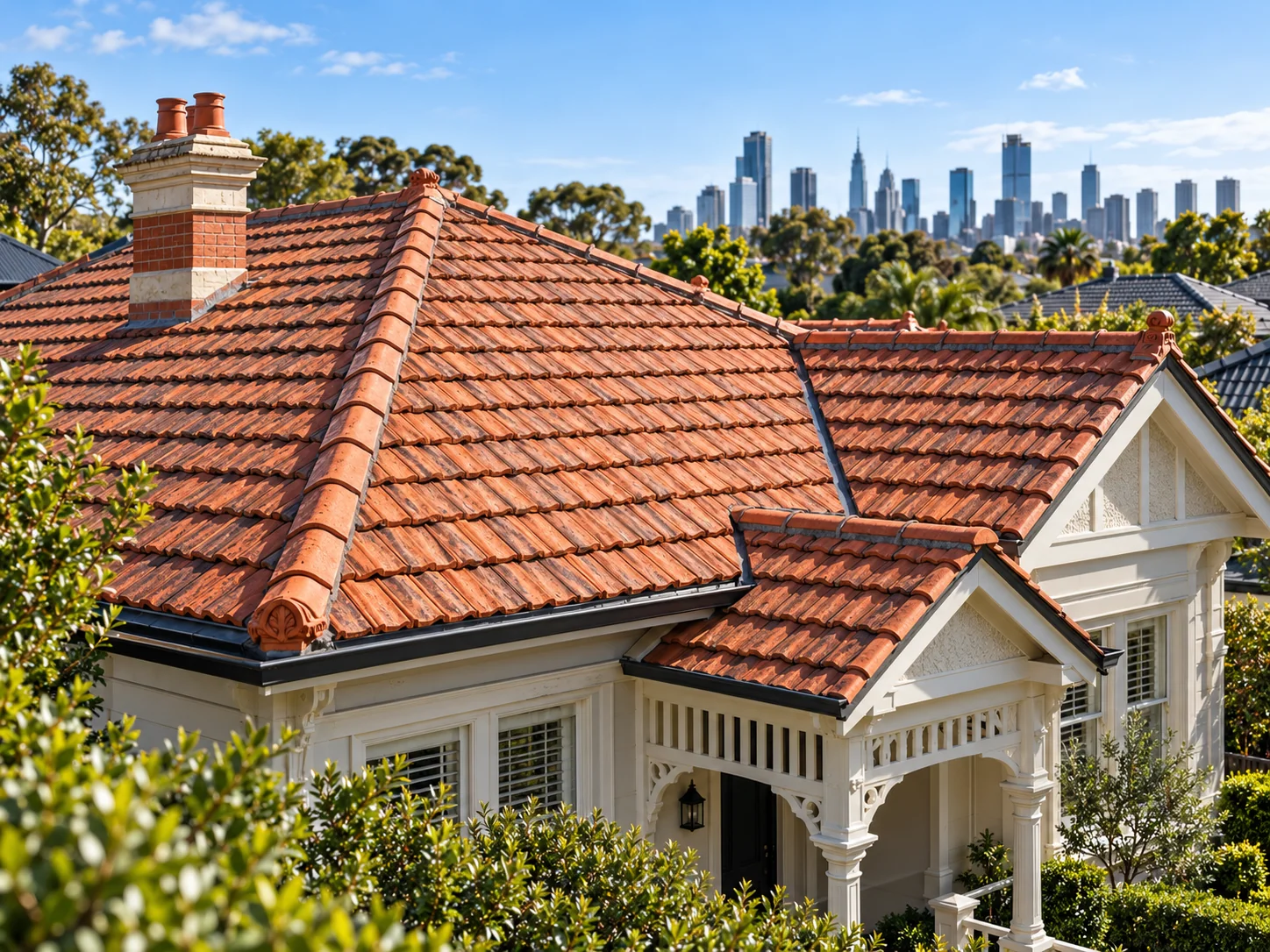
Terracotta across Camberwell, Kew, Hawthorn, Malvern and the older pockets of the south-east fails at the mortar long before the clay gives up. The first question on a restore is whether that is still true of this house. A unit that rings, holds an edge and sheds water once it is seated can stay. A unit that flakes, drinks water through a soft body, or has already been patched until the lap is a collage cannot be restored into health. We break that news on the roof, with the piece in hand. The job that follows a yes is terracotta roof restoration in Melbourne.
Houses need this test before a colour chart. A pre-sale grey roof can hide a sound Marseille field or a tired one. The building report’s phrase “terracotta deteriorated” might mean powder pointing, which is fixable, or a body that is done, which is not. Roof Revival Melbourne reads the verb against the tile. If the body is sound, the first spend is mechanical. If it is not, we talk replacement, commonly from about $20,000 on a standard home, and we stop designing a coating.
Second, the profile has to match the street
These roofs are seen. A new tile with the right family name and the wrong roll still reads as a patch from the opposite kerb. Marseille, and the later copies of it, are not one shape. The nose, the overlap and the colour of the clay differ by decade and by yard. What the house needs first, after a sound body, is a spare that belongs. We take the sample from the roof, not from a catalogue photo labelled “federation”.
Placement matters as much as the match. A correct new unit in the middle of a weathered plane will still look younger. We use originals on the street face where we can, and we put new pieces where the eye is kinder, without breaking the lap. Paint is a poor disguise for a wrong roll. It makes the shape cleaner and more obvious. If we cannot match, we say so before the restore is sold as invisible. Some streets would rather see an honest repair than a blended fiction.
Third, the ridges and hips are the weatherproofing
The tile field can be beautiful and still leak at every hip. Bedding is the mortar that holds the cap. Pointing is the finish at the edge. On a Melbourne terracotta restore both have to be renewed where they have powdered or cracked, not smeared. Flexible systems and traditional mortar are specified for the movement and the look the house needs. A dead bed left underneath a new bead is how the cap lifts in the next hot week. This is the work the house needs before a coating is even a sentence.
Valleys, chimney aprons and the top course under the ridge are part of the same first pass. A restore that repoints the ridge you can see from the driveway and leaves the rear hip open has restored the photo. We walk every ridge. Two-storey houses and steep streets change how that walk is priced. Access is not a footnote on terracotta; it is often why the previous quote was cheap and the high hip was skipped.
The face comes after, and sometimes it should be light
Once the body, the match and the beds are honest, a finish can be specified. Some unglazed tiles take a coating well and the street accepts a deeper colour. Some glazed tiles, and some heritage streets, want a lighter hand or no heavy film at all. A modern coating that reads as plastic on a Kew ridge is a failed restore even if it is watertight. We name the product and the look. We do not hand the owner a method for coating it themselves. That path is how dust gets locked under a skin.
Planning bands for a standard home sit around $4,000–$12,000 when this is a true restore: inspect, broken-unit allowance, re-bed and repoint, prep, then the finish that belongs. Large, steep, multi-plane roofs move through that band. A number well under it, with “clean and coat” as the method, is a different product. Compare scopes. Do not compare a spray with a bedded roof and call the gap a discount.
Asbestos sheet stops the quote
If asbestos cement shows on an eave, a garage or an old skillion behind the terracotta, we identify it and stop. Removal is a licensed trade. We will not bury a method for it inside a restore quote. The terracotta work can be planned around that limit. Pretending the sheet is “old tile” is how the wrong people get asked to cut it.
What we record on the first visit
Profile, a note on glaze, the condition of the body, which ridges have failed, how many units must be swapped, and whether the roof space is dry. We record the street constraints if a colour change would upset the row. We say what has to happen first, in order, and what we are refusing to sell. Photos go with the quote so a later coat cannot be mistaken for the job you thought you bought.
Send the suburb, the storeys and a photo from the footpath. If a report already exists, send the roof page. Roof Revival Melbourne will tell you whether this house needs bedding and a match, or whether the clay has already had its last restore. The first need is the one we write at the top. Colour, if it earns a place, is further down the page.
Typical order on a terracotta restore
- 1. Test the clay and match the profile
- 2. Re-bed and repoint failed ridges and hips
- 3. Swap broken units where the lap needs them
- 4. Prep, then specify a finish the street can wear
- 5. Handover photos of beds, not only of colour