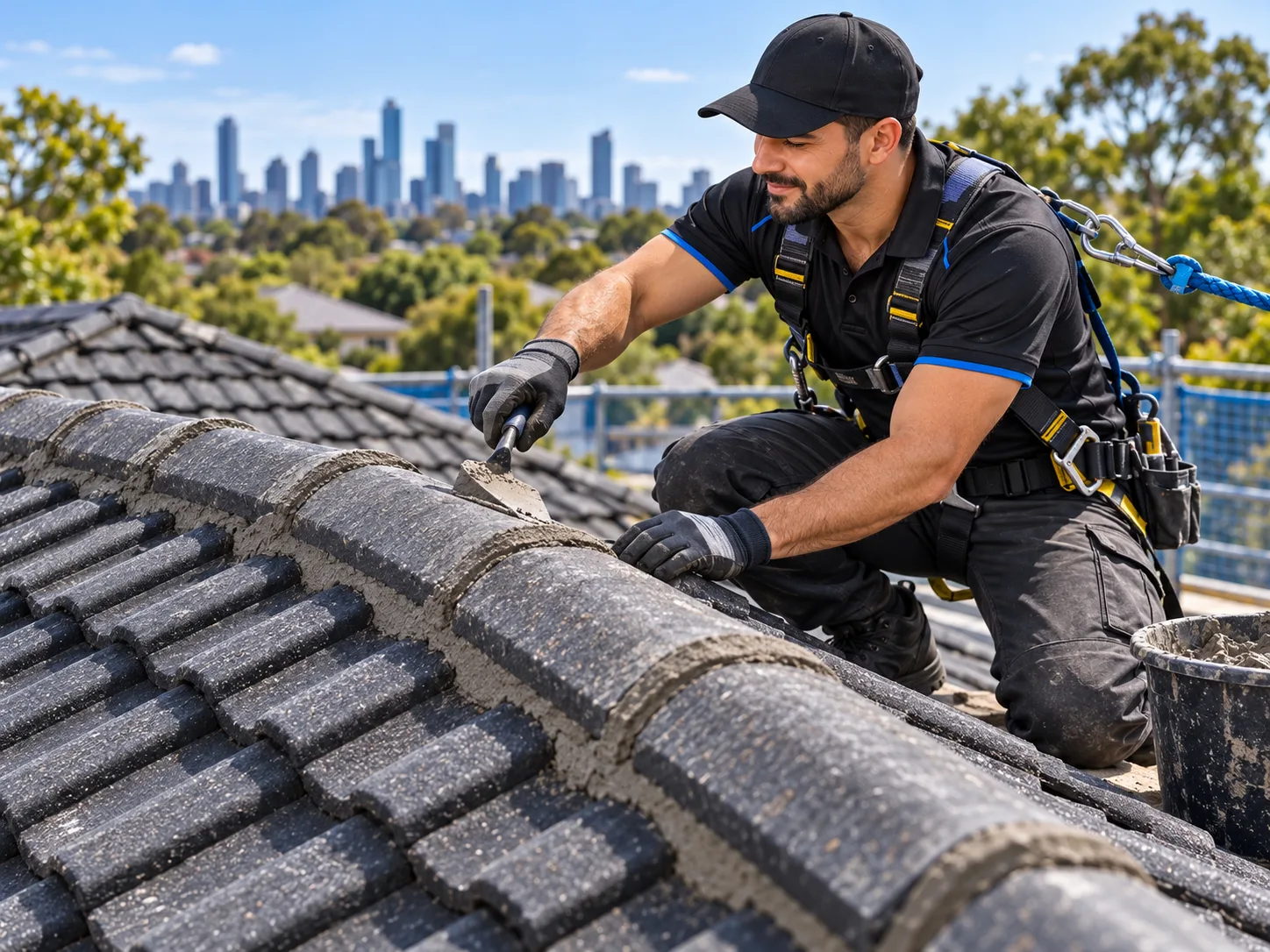
Key takeaways
- Salt air in Frankston does not condemn every metal roof, and it does condemn the details if they were specified for a dry inland estate.
- Confirmation that the old sheet is finished, in words: opened laps, rust-through, failed underlay, not “it looks chalky”.
- A grid of dead washers on an otherwise intact sheet is a re-screw and a check of the flashings.
General guidance for Melbourne roofs. The written scope after an assessment decides the work.
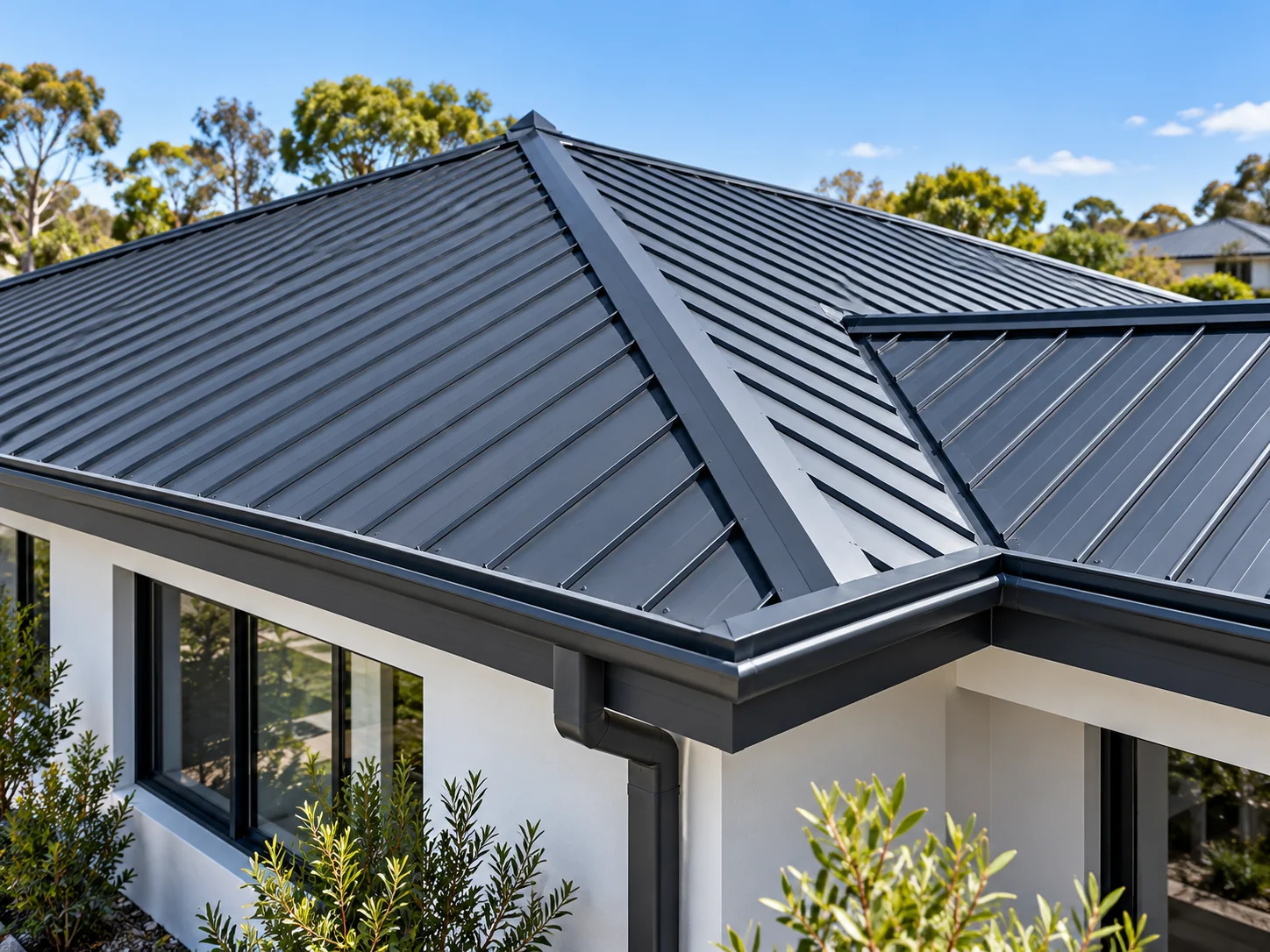
The short version
Salt air in Frankston does not condemn every metal roof, and it does condemn the details if they were specified for a dry inland estate. Washers perish, cheap flashings pit, cut edges and swarf start the sheet, and a southerly pushes water through the gap corrosion opened. Replacement is the right product when the sheet and the underlay have joined that failure. It is the wrong product when only the screws have died. The scope is how you tell the two apart before you pay.
That replacement lives on Colorbond roof replacement in Melbourne. Frankston does not change the product into a mystery coastal package. It changes the lines inside it. A full re-roof commonly starts around $20,000 once the roof is measured. Fastener replacement on a sound sheet is a smaller repair and should not be dressed up as a new roof to match the word salt.
What salt does to a metal roof here
The weather face takes the deposit. Dew cycles it. Screw washers go hard, split, and leak in a grid while the sheet still looks like a sheet from the street. Ridge caps lose their edge. Aprons and barges pit, especially where they were mild metal dressed tight and then left in the air. Swarf left on the roof after a careless install becomes a rust spot that owners discover as a stain in the ceiling and a brown freckle on the rib. Gutters rust from the outside. None of that requires a new field of sheets until the sheet itself is open or thin.
Exposure is not one Frankston category. A foreshore elevation and an elevated Frankston South ridge take a harder fetch than a court that sits in behind houses and trees. We write the elevation. We do not add a marine surcharge because the postcode is 3199, and we do not specify an inland fastener because the beach is a short drive rather than a view. The manufacturer’s expectations for severe marine zones are for severe marine roofs. A sheltered block is not pretending to be a headland, and a headland is not pretending to be Keysborough.
Wind is the second half. A flashing can be new and still too short to stop rain driven up the lap. Salt opens old metal. Wind tests geometry. A replacement that copies the old, too-short cover will leak with clean sheets. The scope should say cover and detail, not only the colour name from the chart.
What belongs in the replacement scope
Confirmation that the old sheet is finished, in words: opened laps, rust-through, failed underlay, not “it looks chalky”. Chalk and fade can be a surface. They are not, alone, a strip. Then strip and disposal, on a site that may be tight, steep, or exposed to a southerly while it is open. New sarking, because the point of replacing a salt-finished roof is the layers you could not see. Battens where the system needs them. The sheet profile suited to the pitch. Fasteners named for the exposure, not “screws included”. Flashings and ridge details in metal that matches that exposure. Valleys and penetrations. A yes or no on gutters, which on this edge are often yes. Solar off and on. Scaffold and edge protection for wind, not for a calm brochure day.
If the quote says “coastal Colorbond” and then lists none of those, you are buying a colour. Ask which fastener and which flashing metal. Ask what happens to the old swarf so the new roof does not start its rust on day one. Ask whether the gutters are in. A domestic re-roof that omits holed, salt-cut gutters will overflow into the eaves and look like the new roof failed. It was the trough that was never in the scope.
Tile-to-metal is a different Frankston job from metal-to-metal. If you are leaving a finished tile roof, the scope includes tile disposal, a pitch check, and flashings into walls that used to meet tiles. If you are replacing existing Colorbond, the scope includes why the first metal roof died so the second one is not the same specification with a fresher warranty card. Salt is allowed to be the reason. “Everyone in Frankston replaces at twenty years” is not a reason we will write.
When replacement is too much
A grid of dead washers on an otherwise intact sheet is a re-screw and a check of the flashings. A single pitted apron is a flashing job. A chalky but sound roof is not automatically a strip, and it is not automatically a repaint either. Repaint on metal that is already holed wastes the paint. Repair on metal that has opened at the laps wastes the screws. The inspect is allowed to choose. Roof Revival Melbourne would rather invoice the washer replacement than sell a new roof to justify the drive.
Mixed houses are common: tile on the original, Colorbond on the extension, salt on both. Replace the half that has finished. Flash the join properly. Do not strip the sound tile because the metal wing looks tired, and do not coat the tile and ignore opened sheets. Two materials, one salt load, one junction. The replacement scope covers the failed material only, unless both have failed, in which case both are listed and you can see the split in the price.
Read rust on metal roofs for the stain that is a hole and the stain that is not, and repaint versus replace before a spray quote and a strip quote are treated as the same offer with different moods.
Before we measure
Say how close the roof is to open water, in ordinary words. Say if the leak is a drip at screws or a wet ceiling under a lap. Two photos of the weather face from the ground, and one of any brown freckle you can see without climbing. Storeys. Whether gutters are already holed. We will not price a Frankston Colorbond roof as an inland sheet count. We also will not refuse to repair a sound one because the air is salty.
The replacement scope is sheets, fasteners, flashings, underlay, and the exposure written down. Salt is the reason those lines exist. It is not a line by itself.
A Frankston metal replace, written
- 1. Separate dead screws from a finished sheet
- 2. Name the exposure on that elevation
- 3. Specify fasteners, flashings, sarking, and gutters
- 4. Detail laps for wind, not only for salt
- 5. Leave sound tile or sound sheet off the strip