Key takeaways
- Frankston marks the peninsula fringe, and bay air reaches further than the sand.
- Salt deposits, dew dissolves it, and the cycle repeats.
- Ridge and hip re-bed and repoint, with metres, not “ridges as required”.
General guidance for Melbourne roofs. The written scope after an assessment decides the work.
The short version
Frankston marks the peninsula fringe, and bay air reaches further than the sand. Salt-laden wind opens mortar and metal years earlier than the same roof would fail in Cranbourne. The restore is still a system: re-bed, repoint, swap broken units, prep, then a coating specified for the face. Coast air changes which lines must be explicit. It does not replace the need for lines. A quote that says “coastal grade” and then lists only a colour has not written the scope.
The Frankston job sits on roof restoration Frankston. The inspection notes still name the street’s exposure. Planning for a standard home often sits around $4,000–$12,000. Frankston salt work is quoted after we see the flashings, not from a beach postcard. If the field is finished, replacement is the other product and commonly starts around $20,000 once measured.
What coast air actually does
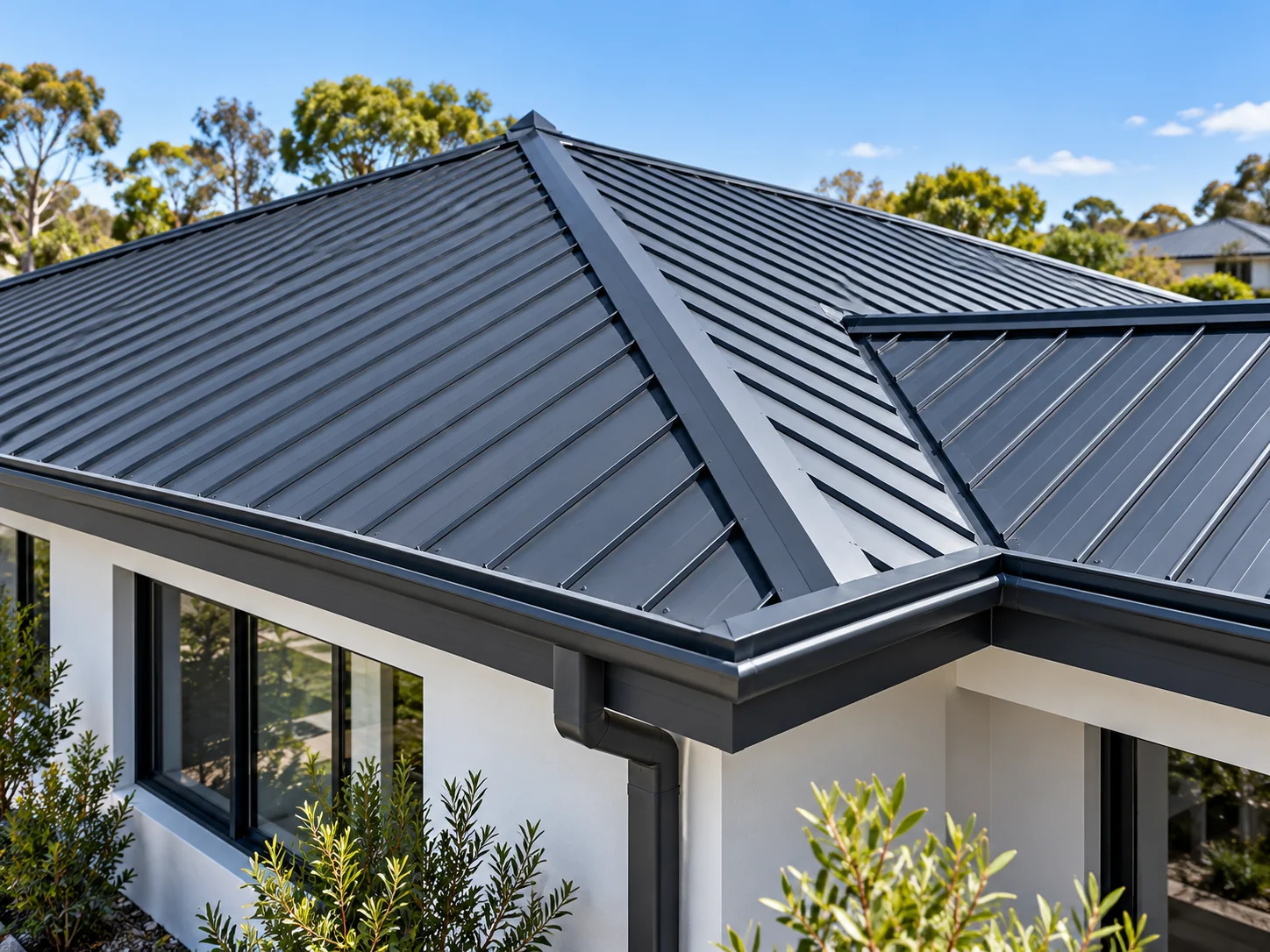
Salt deposits, dew dissolves it, and the cycle repeats. On tile, the early damage is the ridge bed and the metal details. Aprons, step flashings, valley irons, and gutter brackets powder or pit while the field tile still has a hard body. On any metal wing, screw washers perish and each fastener becomes a drip. Lichen holds moisture on the shaded pitch, especially where gums and coastal tea tree drop litter all year. North faces that stay damp longer than owners expect grow a film that looks like rot and is often just growth over a sound unit.
Foreshore streets, Frankston South ridges, and elevated ground towards Olivers Hill and Sweetwater Creek take a harder fetch than a court further inland. We still treat Frankston as coastal when the air and the southerly say so, and we still refuse to upcharge a sheltered block with a marine story it does not have. The written scope should name the elevation. “Frankston roof” is not an exposure category.
Wind drives rain under laps and into gable ends that an inland installer never had to respect. A new flashing can be too short in the cover and leak with shiny metal. Salt opens the old ones. Wind tests the new ones. Both belong in the inspection notes, in sentences an owner can read, not in a single adjective on the front page of the quote.
The lines a Frankston scope has to show
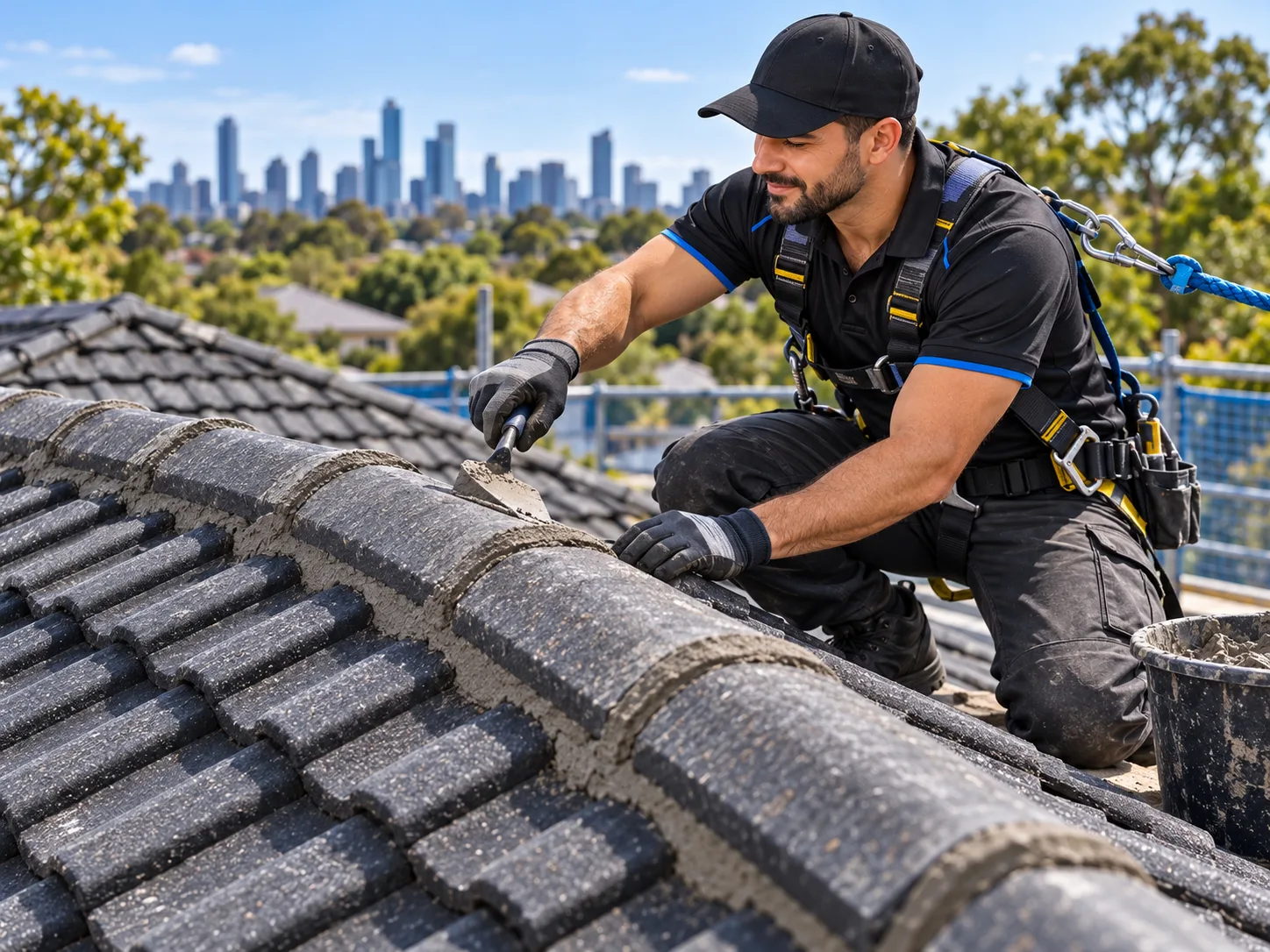
Ridge and hip re-bed and repoint, with metres, not “ridges as required”. A broken-tile allowance, because a cracked unit is a leak waiting for the next cell, and salt does not make that less true. Valleys: clean is not our product, but a holed valley iron is a replacement line inside the week. Flashings: each failed apron called out, with the metal to be used, not “check flashings” as a maybe. Prep before any coat, because a film on salt crust and dust peels. The coating system named for the substrate. Gutters if they are holed from the outside in. Solar sequenced so bays under panels are not skipped.
If any of those lines is missing, ask why. Coast air is the reason they are more likely to be needed. It is not a reason to hide them inside a round figure. Roof Revival Melbourne will itemise the salt work and will also itemise what is sound and left alone. A scope that replaces every piece of metal “because Frankston” is as dishonest as a scope that paints over lace.
1960s brick veneer with original concrete tile is common, and so is terracotta on elevated Frankston South houses. The mechanical work is similar. The coating conversation is not. Terracotta that is still sound may want a lighter, more careful finish than a heavy film sold as “the coastal system”. We say so before the colour is locked. Concrete that is dense can take a specified membrane after the beds are reset. Concrete that is soft is not saved by the word coastal.
Written, not spoken
The failure mode we see after cheap Frankston jobs is oral scope. Someone said the ridges would be done. The invoice says coat. The south pitch peels and the pointing is the original powder. You cannot warranty a sentence that was never on the page. Ask for the bed reset, the tile count, and the flashing list in the same document as the price. Compare that document, not the salesperson’s memory, if you have three quotes. This is the same rule as anywhere in Melbourne. Coast air makes the gap more expensive when it is wrong.
Warranties on coatings do not cover a finished tile body, a bed that was never reset, or salt already through a flashing. Read what is warranted: the film, the pointing, the workmanship. Ask what voids it. A decade-plus restore is a specified system on a sound body. A two-year paint is a colour. We will not use the first name for the second product because the house can smell the bay.
Overlays and neighbourhood character matter on some Frankston streets and not on others. We do not invent a council outcome. If the streetscape is clearly controlled, the colour goes on the list as “confirm before order”, not as a surprise after the scaffold is up. Bring any report you already have. The verb in it — monitor, repoint, replace — is not a price, and we still inspect.
When the scope should say replace
Restoration is the wrong job when tiles snap, when more than about a fifth of the field is crumbling, when battens are soft, or when sarking is wet across large bays. Salt explains the speed. It is not, by itself, the verdict. A blocked valley over dry underlay is a clue to clear and repair. A blocked valley over dead underlay is a clue to stop selling a coat. Previous cheap films that are peeling off a pitted body are not a third coat. They are evidence.
If that is the roof, the Frankston conversation moves to replacement and the measure starts again: strip, disposal, sarking, flashings specified for the air, and gutters if the old ones are finished. Do not let a restore quote and a replace guess compete as if they were the same line items. Read written scope versus a day rate and signs you need a new roof before you sign the cheaper page that lists only a colour.
What we need from you
Suburb is not enough. Say Frankston, Frankston South, or how close you are to open water if you know. Storeys. Tile or metal or both. Two photos: the weather face from the ground, and the ceiling if it is stained. Do not climb for a closer shot. We will. If the house was vacant, say so, because a winter leak in an empty place shows in the roof space more honestly than on the tile colour.
Roof Revival Melbourne will write the coast into the scope as metal, mortar, and prep. We will not write it as a surcharge with nothing underneath. The service is a Melbourne restore, done on a Frankston roof, with the lines filled in for the air that roof actually takes.
From inspect to a Frankston scope
- 1. Name the exposure on that elevation
- 2. Test tile, pointing, flashings, and valleys
- 3. Check the roof space
- 4. Write every salt-affected detail as a line
- 5. Coat only if the body is sound