

Key takeaways
- The same brand name covers a family home and a factory in Greater Dandenong, and the roofs are not cousins.
- A Dandenong house in Colorbond might be a rebuild that already left tiles behind, or a tiled house that has reached the point where another coat is dishonest.
- Work buildings fail at fasteners, laps, box gutters, and holes cut for plant that were flashed once and never again.
General guidance for Melbourne roofs. The written scope after an assessment decides the work.
The short version
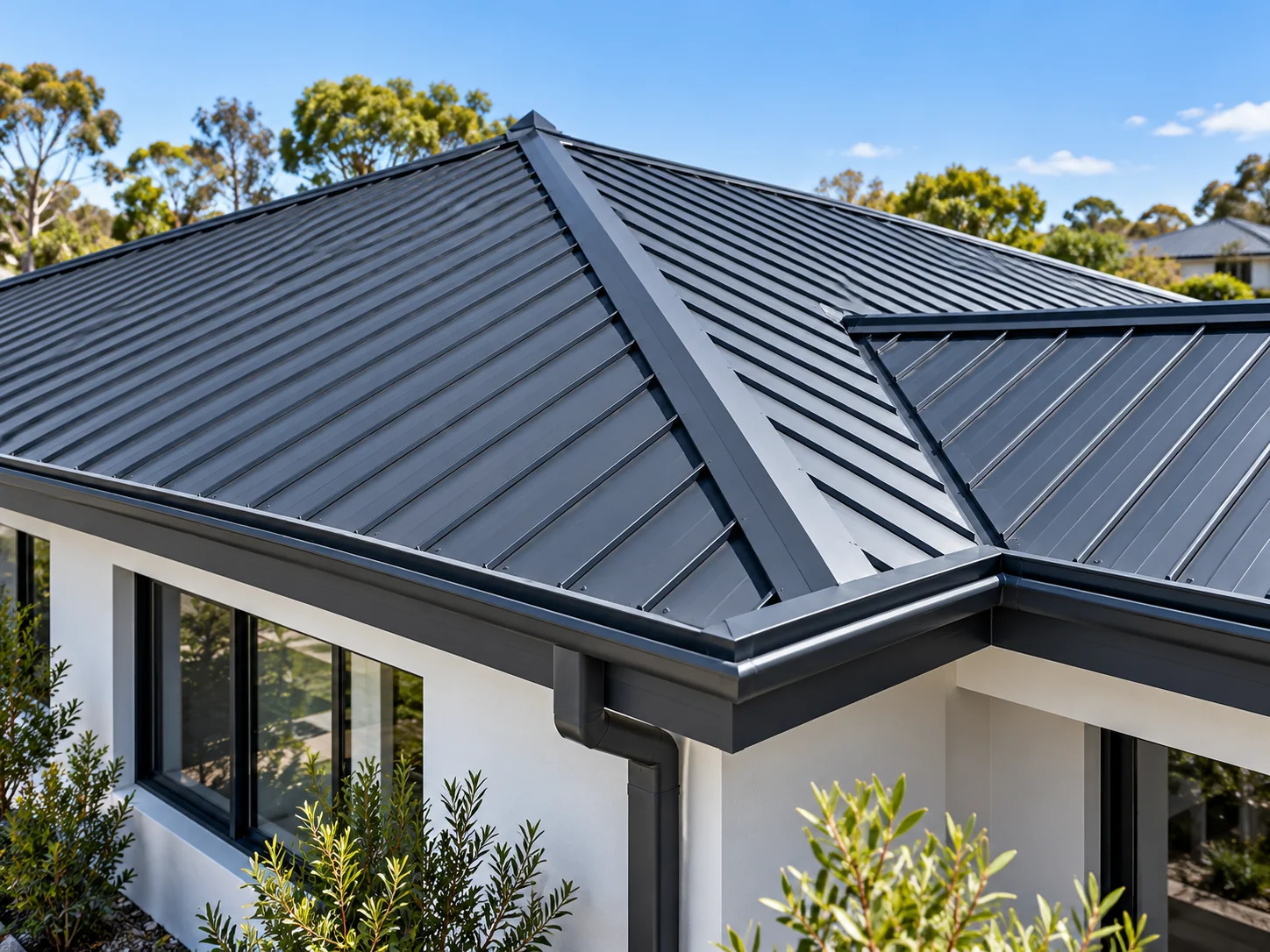
The same brand name covers a family home and a factory in Greater Dandenong, and the roofs are not cousins. A house is usually a hip or gable, residential gutters, sarking, solar, and a neighbour on the boundary. A shed or workshop is span, purlins, box gutters, penetrations for plant, and a yard rather than a driveway. Roof Revival Melbourne asks which one you mean before talking Colorbond. Colour swatches are the last page. The building type is the first.
Replacement for that metal sits on Colorbond roof replacement in Melbourne. There is no Dandenong Colorbond page to send you to, and a house restoration URL would be the wrong product. A full domestic re-roof commonly starts around $20,000 once measured. A commercial span is not that sentence with a bigger number guessed from the street. It gets its own measure.
The house roof
A Dandenong house in Colorbond might be a rebuild that already left tiles behind, or a tiled house that has reached the point where another coat is dishonest. The domestic scope names the pitch, the sheet profile, sarking, battens, flashings into brick or cladding, valleys or a simple hip, and what happens to solar. Insulation and ceiling access matter because people live under it. Noise, condensation, and a skylight are house sentences. They are easy to forget if the quote was copied from a bare shed.
Dust from the industrial edge still lands on houses. It sands a new finish if swarf and fallout are left in the laps, and it is not a reason to specify a commercial gutter on a bungalow. Prep and a clean site at install are house lines. So is parking a truck without blocking a narrow street. Two storeys change scaffold. A small setback changes where the old roof comes down. None of that is a factory method with a residential colour on the front.
If the existing house roof is tile and still sound, Colorbond is not the next automatic step. A restore may be the honest spend, in a different band, often around $4,000–$12,000 for a standard home, and it is not this article’s product. We will say so. Switching a hard tile roof to metal because a shed down the road looks neat is a preference, and preferences still need a scope: disposal of tile, new underlay, and a check that the pitch suits the sheet. Preference is allowed. Disguising it as the only option is not.
The shed roof
Work buildings fail at fasteners, laps, box gutters, and holes cut for plant that were flashed once and never again. A Colorbond replacement on that roof is a span problem. Purlins may be rusted where the gutter overflowed for years. Skylights may be the leak everyone has been bucketing. The sheet profile has to suit the existing structure or the structure has to be repaired first, and that repair is not a “roof extra” you discover after the crane is booked. Say the span, the leaks, and whether people work under the roof on the day.
Dust is part of the industrial edge, not a mood. Fallout in a fresh lap is a future leak. A coating over a dusty, sound sheet can be a metal restore. A sheet that has rusted through is a replacement. Those are different. Calling both “Colorbond roofing Dandenong” lets a paint quote look like a new roof. Ask whether the old sheet stays. If it stays, you are not buying replacement. If it goes, the quote should say disposal, the new sheet, fasteners, and how the box gutter is rebuilt or retained.
Who signs matters more on the shed. A tenant ringing about a drip cannot always approve a re-roof. A landlord who has not seen the scope will stop the job when the yard is full of old sheet. Name the approver before materials are ordered. Hours of work underneath matter too. A house can sometimes be lived in during a re-roof. A workshop may need a shutdown. That is a line, not a favour.
What both still share
Both need the sheet and the fastener to match the exposure, which in Dandenong is dust and ordinary suburban weather more than Frankston salt. Do not import a beach spec, and do not ignore corrosion where a gutter has been wet for a decade. Both need flashings that are actually detailed, not a note that says “flash as required”. Both need the old roof’s leaks explained so the new roof does not inherit the same upstand. And both need a written exclusion list. “Supply and fix Colorbond” is not a scope. It is a material.
Storm damage is a third path that can hit either building. A limb or a hail-bruised sheet can be a repair. It is not a reason to replace every bay because the suburb has industry in it. We isolate what failed. Read factory and warehouse roofs if the building is a workplace, and Colorbond repaint versus replace if someone is offering a spray on a shed that might already be holed.
How to start
First sentence: house or shed. Then approximate size, pitch if you know it, and whether the leak is into a bedroom or onto a floor. Two photos of the whole building, not only a rib of the sheet. If you have both buildings, expect two scopes. Roof Revival Melbourne will replace the roof that is finished and will not use a domestic Colorbond package to describe a span it was never written for.
The colour can wait until the structure, the gutters, and the approver are on the page. Dandenong has enough of both roofs that the wrong template is the main risk. Name the building and the template gets chosen for you, honestly.
House or shed, before the colour
- 1. Say house or industrial in the first sentence
- 2. Inspect the structure the sheet sits on
- 3. Separate replacement from a coat on a sound sheet
- 4. Write gutters, fasteners, and access for that building
- 5. Name who can approve the spend