Key takeaways
- Box Hill’s post-war and 1960s roofs are mostly concrete tile on cream brick and later veneer, with terracotta still on some older pockets.
- From the footpath a Box Hill roof looks dull. Up close the caps sit on beds that have cracked along the arris.
- Box Hill sits in the eastern hail path. A storm cracks units that were sound the day before.
General guidance for Melbourne roofs. The written scope after an assessment decides the work.

The short version
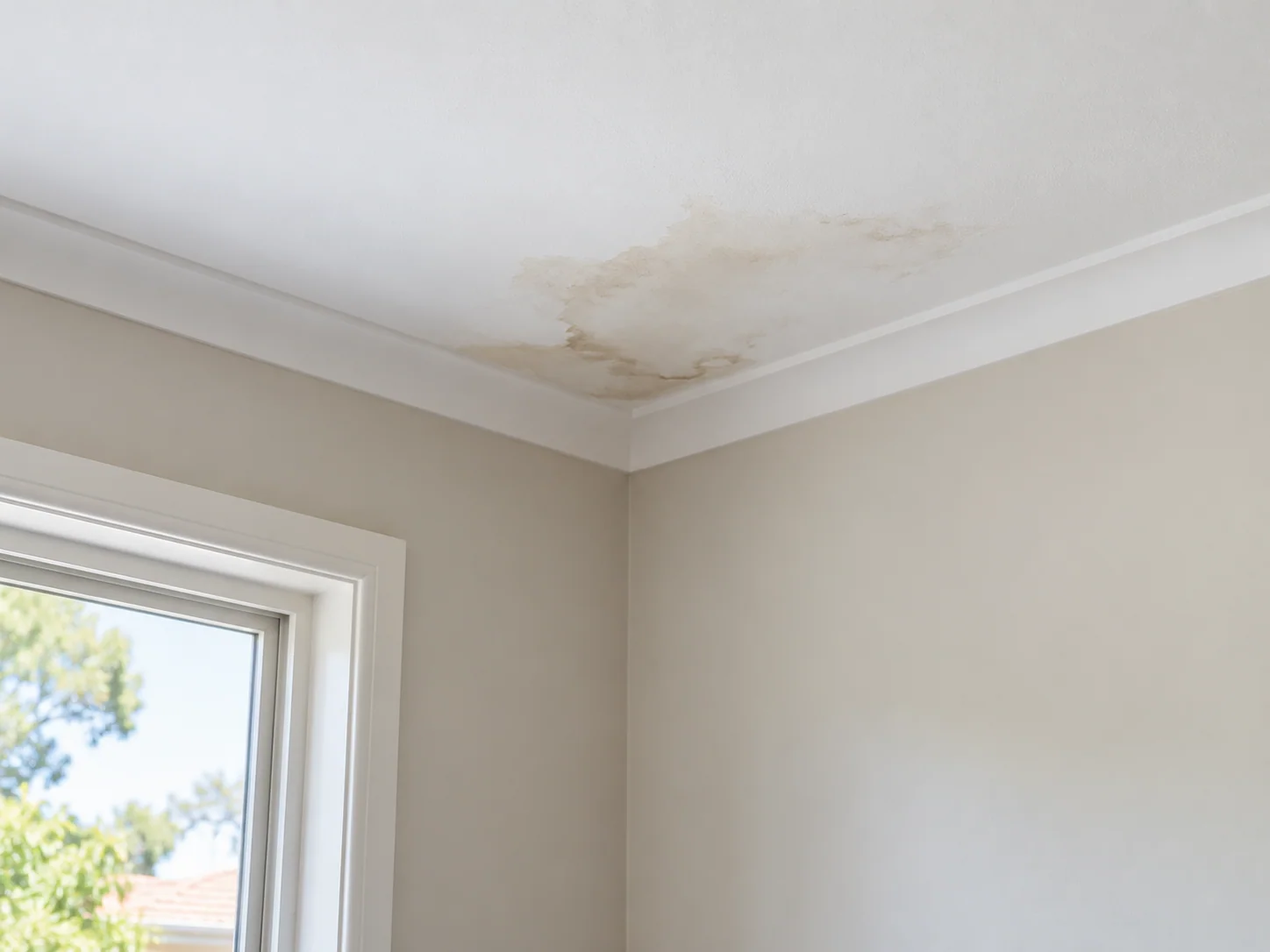
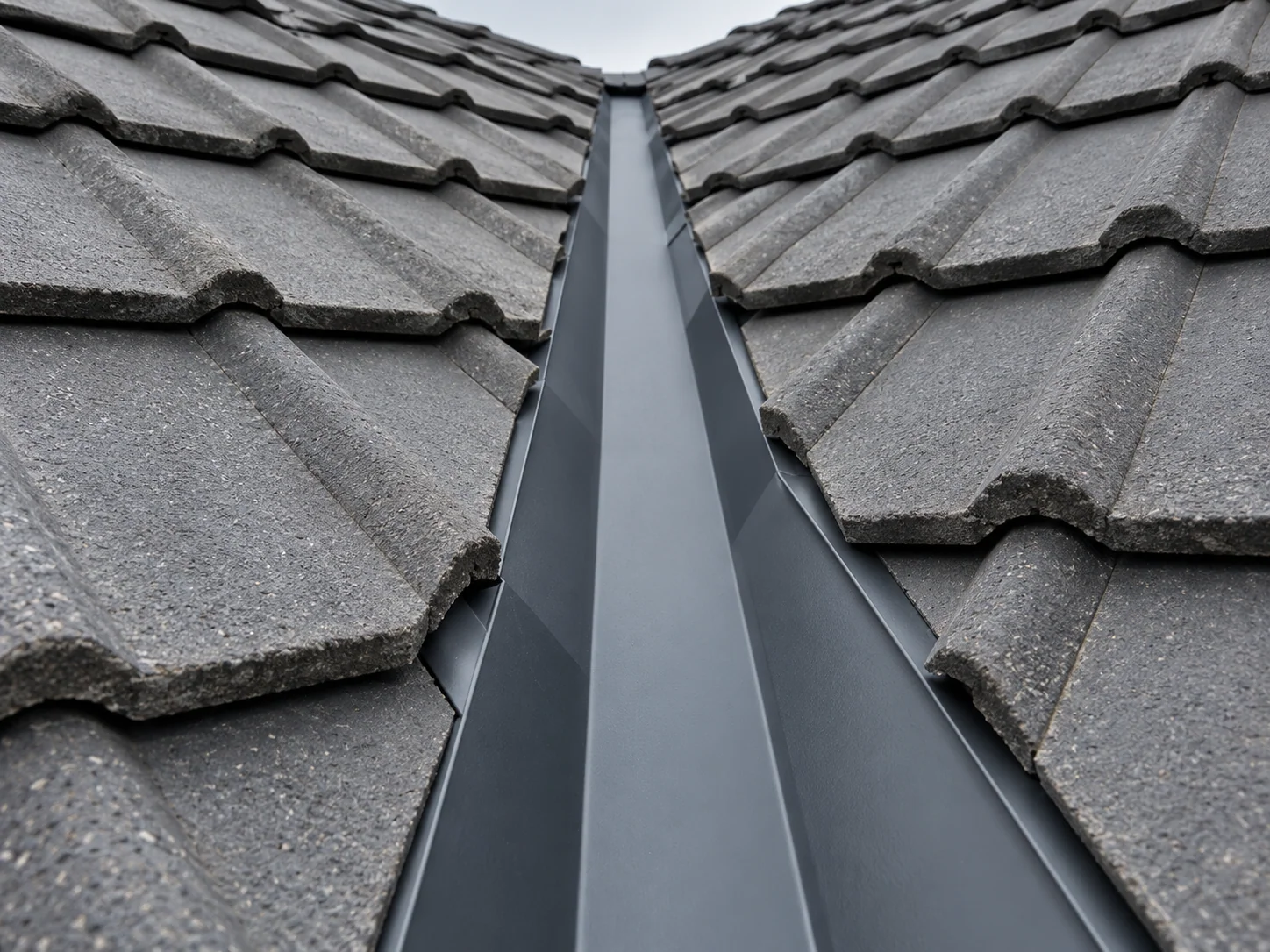
Box Hill’s post-war and 1960s roofs are mostly concrete tile on cream brick and later veneer, with terracotta still on some older pockets. The mortar was sand and cement. It has cooked in eastern roof spaces and opened in winter rain. Powder in the gutter is the clue. A hallway stain under a hip is the result. Cracks from hail or from a walked batten line are the second failure. Valley steel is the third, especially where trees sit on the block. None of those, by themselves, means the tile generation has ended.
The repair page is Box Hill roof repairs. If the same failures run the length of every ridge and you choose a full system, a standard Melbourne restore is often planned around $4,000–$12,000. If the tile itself crumbles, replacement commonly starts around $20,000. A post-war hip with one open bed is priced as that hip. Whitehorse is not a surcharge and not a discount.
Bedding: the failure people photograph badly
From the footpath a Box Hill roof looks dull. Up close the caps sit on beds that have cracked along the arris. Some beds have dropped into the roof space. Some have been smeared with a later mortar or a flexible coat that bridged a hollow. Water does not need a missing tile. It needs a gap at the apex and gravity. The repair is to cut the failed bed out and re-bed, then point. Painting the caps does not replace that. A “repoint” that leaves the old bed in place is a cosmetic on a leak.
Post-war hips are often long enough that one failed metre is visible and four more are not, because they face the side fence. We walk them. If only the street hip has opened, the repair can stop there and the report should say the others were tight. If all of them powder, selling a single-metre rescue is how you are back in a year. The geometry of these houses is simpler than a foothills gable, which makes a thorough ridge check faster, not optional.
The crack list, including hail
Box Hill sits in the eastern hail path. A storm cracks units that were sound the day before. Those units are a repair: count them, swap them, check the batten under a heavy strike. They are not, automatically, a new roof, and they are not the same line as the bedding that was already failing in 2019. A quote that says “hail damage” and then coats the house has mixed a storm list with a colour. Separate them. Insurers and owners both need the count. We do not invent impact that is not on the roof, and we do not call old mortar a storm.
Other cracks are slower. A tile soft at the nose from manufacture, a unit broken when a bracket was fitted, a corner clipped by a ladder. The post-war field can spare those. It cannot spare a plane where every nose crumbles as it is lifted. That is the moment the repair allowance ends. About a fifth of the field finished is the practical line we use before we stop talking swaps and start talking replacement. The line is confirmed in the hand, not from a hail memory.
Valleys, pipes, and the additions
Post-war roofs grew. A later bathroom, a rumpus, a solar array. The original valley was sized for the first plan. Leaf and rust finish the steel. Pipe penetrations and solar conduits leak at the dressing, not through the tile body. The repair replaces or re-dresses that piece and the tiles that have to come up to do it. It does not require the street elevation to change colour.
Gutter overflow is the Box Hill imitator. Plane trees and ordinary silt block a trough, water returns at the eaves, and the ceiling mark sits where a tile leak would sit. If the course above is tight, fix the fall and the outlet. Overflow versus a roof leak is the split. Post-war tile gets blamed because it is old enough to suspect. Age is not evidence if the lap is dry.
Terracotta pockets are not the same failure
Some Box Hill streets still have clay, earlier than the concrete boom. Those fail at beds too, but the unit, the cap profile and the match are different. Do not let a concrete crack-list method get pasted onto Marseilles laps. If we are on clay, the repair says clay. If the street is mixed, the quote says which roof this house is. “Post-war Box Hill” is a useful cluster. It is a sloppy specification if it hides the material.
Two-storey post-war and later veneer in the same postcode add height. The failure can be identical to the bungalow next door. The access is not. A cheap repair that cannot reach the high hip will either grow or it will point what the ladder can touch. Write the storeys into the scope so a single-storey comparison cannot masquerade as the same job.
What we will not call a post-war repair
We will not call a wash a repair. We will not call a full coating a repair of the bed. If you want the face and the joints as a system, that is a restore, planned in the $4,000–$12,000 band for a standard home, then moved by squares and ridge metres. If the concrete has ended, we will say replacement from about $20,000 and stop swapping. Roof Revival Melbourne repairs what failed. On this tile, what failed is usually the joint you cannot see clearly from Station Street, plus the units and valleys the joint has been hiding behind.
Send Box Hill, storeys, a photo of a hip and a photo of any ceiling mark. Mention hail if a named storm is why you called, and say so if the mark is older than the storm. We will map the post-war sequence on your roof, and we will leave out the parts that have not joined it.
Typical inspect-to-scope process
- 1. Check every ridge and hip, not only the street face
- 2. Separate hail cracks from tired bedding
- 3. Open valleys and penetrations that feed a stain
- 4. Price the repair, or step up if the field has finished
- 5. Photos of beds and swapped units