Key takeaways
- Richmond terraces were built with a street wall you can see and a gutter you cannot.
- The parapet is brick or rendered masonry with a coping on top.
- Richmond plans are rarely a single rectangle. A terrace with a rear skillion, a lightwell, or an L where two roofs meet has a valley.
General guidance for Melbourne roofs. The written scope after an assessment decides the work.

The short version
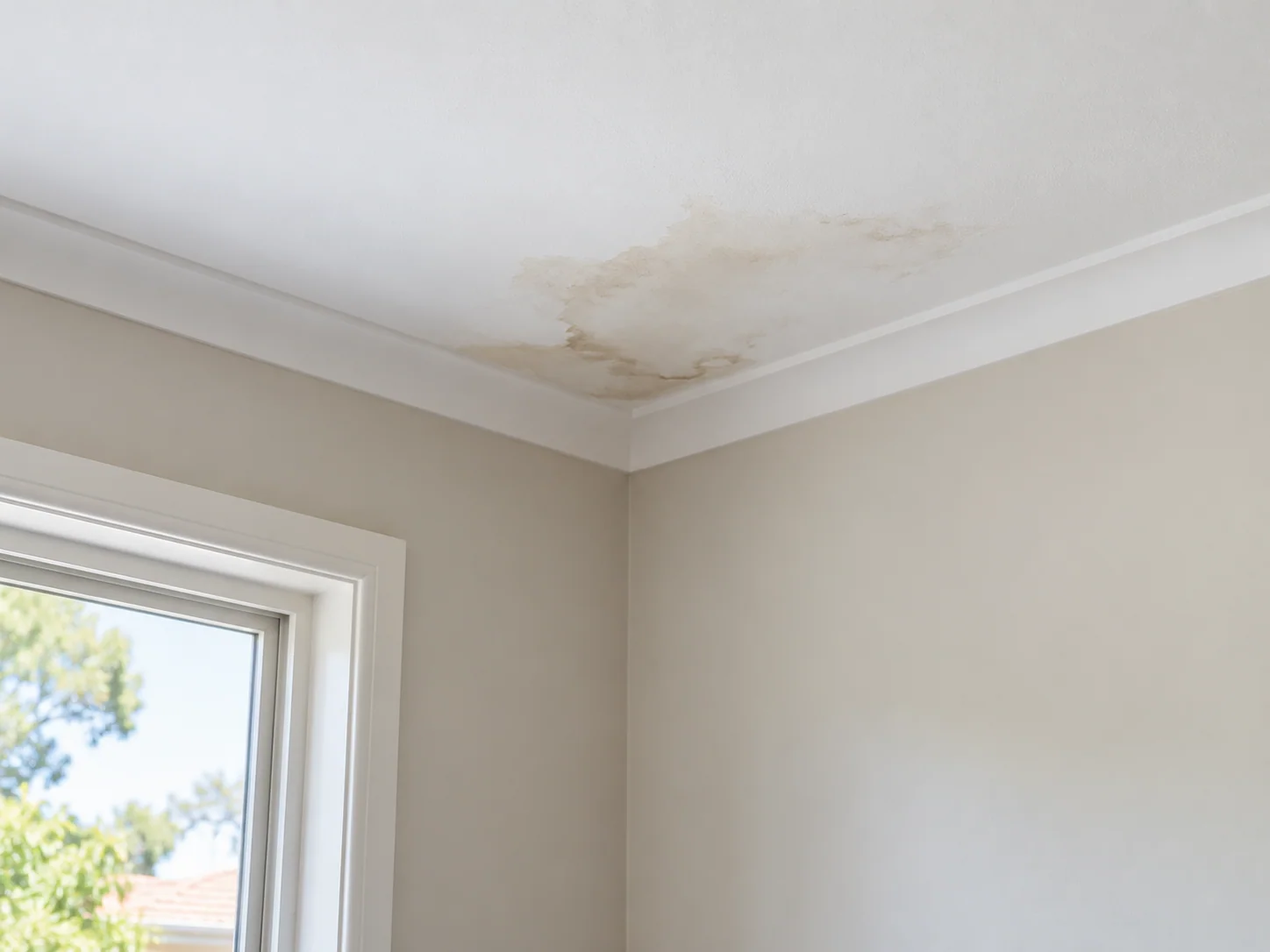
Richmond terraces were built with a street wall you can see and a gutter you cannot. The parapet is the street face. Behind it sits a box gutter. Beside the party wall sits a flashing. Where the plan turns, or where a rear wing meets the original roof, a valley collects water from two faces. Those three places are where Richmond repairs usually start. Water that gets in there can run along a batten, a wall cavity or the top of a ceiling and appear in a room that is not under the failed piece. Local leak repairs for this pattern are on Richmond roof leak repairs.
A useful quote names the opening and the trip. Parapet coping. Box gutter length. Valley iron. Party-wall soaker. It does not say “tiles look old, coat the lot” because a cornice is brown. If the covering itself has finished, or the sarking is wet across the roof, the note changes. A restore on a still-sound tiled roof plans around $4,000–$12,000 for a standard home. Replacement commonly starts from about $20,000. A parapet or a valley on a hard lid stays a repair.
Parapets and the gutter you cannot see from the footpath
The parapet is brick or rendered masonry with a coping on top. The coping cracks, the joint between coping and roof opens, or the flashing that turns the water into the box gutter pulls out. Rain that should have fallen into that hidden gutter runs down the back of the parapet or sideways under the first row of tiles or slates. Inside, the front room stains along the street wall. People blame the chimney, or the whole roof, because the front room is where guests sit. The opening is often a metre of metal and masonry above the cornice, out of sight.
The box gutter itself fails in a second way. It is narrow, original galvanised iron on many of these houses, and it fills with leaf from street trees and from roofs that shed into it. Overflow goes back under the covering. A gutter full of litter can do that on a sound roof. Emptying it is maintenance. A rusted sole, a split, or a gutter with no fall toward the outlet is a repair: reline or replace the failed length, correct the fall, and check the edge that has been sitting wet. Roof Revival Melbourne writes which of those two sentences you are in. A clean does not patch a hole. A new gutter does not fix a coping that is still tipping water the wrong way. Both lines appear if both have failed.
Access is part of the parapet job. These gutters are not a walk from the driveway. Lanes off Swan Street, Bridge Road and the residential grid, two-storey street faces, and shared walls decide the method. The repair can still be local. Tight access changes how we reach the gutter. It does not turn one bay into a new roof. If the quote never mentions how the parapet is reached, ask before you compare the number with a quote that does.
Valleys, and why the stain is in the wrong room
Richmond plans are rarely a single rectangle. A terrace with a rear skillion, a lightwell, or an L where two roofs meet has a valley. Valley iron is a tray. When it rusts, lifts, or gets buried in debris, water leaves the tray and runs under the tiles beside it. The drip you see may be at the bottom of that run, in a hallway or a bedroom that looks unrelated from the ground. Following the stain upward in a straight line is how owners, and some quotes, miss the valley entirely.
The leak path is a sequence we should be able to show you. Opening at the valley or the parapet. Travel along the top of the sarking or a batten. Exit at the stain. Photos of each step beat a paragraph that says the roof is tired. A valley replacement is a defined length of iron, tiles lifted and reset, and a check that the new tray actually has a way out. Pointing over the top of a rusty valley is not that repair. The valley iron leaks page is the detail. Richmond’s version is that the valley is often hidden behind a parapet or between two tight roofs, so the footpath will not diagnose it.
Party walls add a sideways version of the same trip. Cover flashings and soakers on the shared wall open, and the neighbour’s ceiling sometimes stains first. We say which roof owns the path. Repairing your tiles because their cornice is wet spends the day on the wrong title. If both roofs contribute, the quote says so, including whether the neighbour needs to be part of the access.
Slate, terracotta, and the rear iron
Richmond’s older streets carry slate and terracotta, sometimes on the same run of terraces, with corrugated iron on rear skillions that were added later. The leak logic is shared. The material is not. A slipped slate is reset or replaced with a matching unit, and its flashing is dressed. A cracked terracotta hip is a bedding and unit job. A rusted rear sheet is a lap and a fixing job. Writing “roof repair” across all three hides which one is wet. We split them. A local failure on each stays a repair after the inspect, unless the field of that material, or the sarking under it, has finished.
Overflow from a parapet gutter and a true hole in the roof can look identical on the ceiling. One is water that never should have left the gutter. The other is water that came through a joint in the covering. The overflow versus roof leak distinction matters in Richmond because the gutter is concealed. We check the gutter and the covering. We do not pick one from the colour of the stain.
What the repair page should contain
You should see the parapet, the valley, or the party wall named. You should see whether the box gutter is being cleaned, relined, or both, and why. You should see tiles or slates that must come off to reach the joint, and whether they go back. You should see access. You should see what is sound and being left. If every ridge is powder and the units are still hard, a separate sentence can move the job into a restore, with the $4,000–$12,000 planning band explained against your squares and storeys. If the body is finished, replacement from about $20,000 is the honest door. A Facebook number is not a Richmond price.
Send the front parapet, the ceiling stain, and a note about a rear addition if you have one. Do not climb into a parapet gutter to photograph it. Those gutters are not a viewing platform. Roof Revival Melbourne will get onto the roof, trace the path, and write the joint that is actually open. The suburb’s terraces leak in a pattern. Your house still gets its own photos.
Typical inspect-to-scope process
- 1. Read the ceiling stain as the end of a path, not the start
- 2. Inspect parapet, box gutter, valleys and party-wall flashings
- 3. Photograph the opening and the trip to the stain
- 4. Repair that joint — or restore or replace if the field says so
- 5. Handover photos of the gutter or valley that was open