

Key takeaways
- Melbourne streets fill with Colorbond because a neighbour replaced a tired concrete tile roof and the house next door liked the look.
- The old tile, the bedding and the pointing come off. The old battens almost always come off, because tile batten spacing is not sheet spacing.
- Before you switch, the quote should be able to say yes to each of these: the tiles are finished, or you are choosing replacement with your eyes open; the frame has been seen; the pitch suits the named profile; overlays have…
General guidance for Melbourne roofs. The written scope after an assessment decides the work.
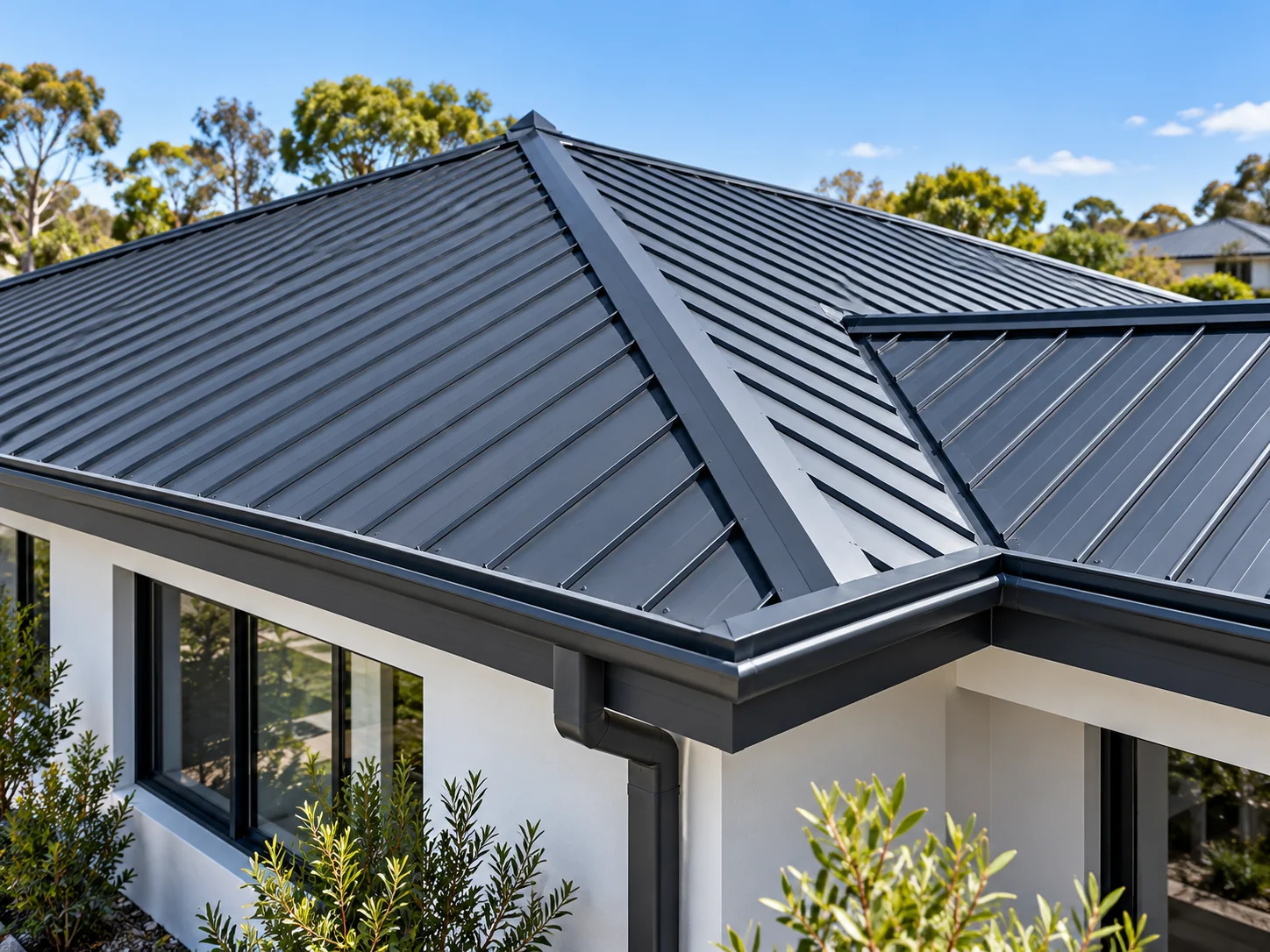
The reason has to be the roof, not the street
Melbourne streets fill with Colorbond because a neighbour replaced a tired concrete tile roof and the house next door liked the look. Liking the look is allowed. It is not, by itself, a reason to strip a roof that still works. The switch is justified when the tile body is crumbling, the ridges have failed across the roof and not just in one bay, the battens or sarking are wet and finished, or the leaks have stopped being local. It is not justified because the colour has darkened, because a salesman called a wash a waste of time, or because a brochure promised a lighter roof without looking at yours.
Roof Revival Melbourne will restore a tile roof that still has a hard body, and we will replace one that does not. Switching material is the replacement path, not a shortcut around a restore. If more of the field is still sound than finished, say so in the inspection and price the smaller job. Replacement of a roof commonly starts from about $20,000. That figure is a planning floor, not your quote, and it is too much money to spend because the house two doors down changed silhouette. The comparison this decision needs is set out on Colorbond versus tile in Melbourne.
Write the reason in a sentence you could show a buyer later. “The concrete tiles were fretting and the sarking was wet on three planes” is a reason. “We wanted grey” is a preference. Preferences can still be met, but they should not be dressed up as a structural necessity. An honest scope can carry both: the roof needs to come off, and you have chosen metal rather than a new tile. Those are different lines, and both should be visible.
The frame, the pitch and the overlay
Tile is heavy. Metal is lighter. Taking tile off usually unloads the frame rather than overloading it, which is why the switch is structurally plausible on so many brick veneers. Plausible is not the same as checked. Rafters that have sagged, battens that are rotten, a ridge that has opened, or ceiling joists that have been cut for a careless downlight run still need a look before a new roof is fastened to them. We are not asking you to diagnose timber from the manhole. We are saying the quote is incomplete if nobody went up and nobody looked under.
Pitch decides whether a given Colorbond profile is even eligible. A steep tiled hip in Doncaster can take several profiles. A low rear skillion that was only just legal under tiles may be too flat for the profile someone picked from a sample board. The profile has to match the pitch, the span and the way the water leaves the roof. Choosing the fashion profile and hoping the laps cope is how a new roof leaks in its first winter. Gutters often change with the switch as well. Tile eaves and metal eaves do not always meet the fascia the same way. If the quote is silent on gutters, valleys and flashings, it is silent on the parts that leak.
Overlays stop jobs that the structure would have allowed. A heritage overlay, a neighbourhood character control, or a streetscape that council treats as intact can refuse a change from tile to metal, or refuse a colour, even when the tiles are genuinely finished. That is a planning question, not a roofing opinion. Roof Revival Melbourne will not strip a protected roof while that answer is open. If you are in Camberwell, Kew, parts of Brunswick, or any street where the planning scheme cares about the roof, find out before the skip is booked. A refusal after the tiles are on the truck is an expensive way to learn the overlay.
What actually has to come off
The old tile, the bedding and the pointing come off. The old battens almost always come off, because tile batten spacing is not sheet spacing. Sarking is replaced where it is brittle, torn or missing, which on a roof old enough to retire the tiles is the usual case. New battens, new sheet, new flashings at chimneys and walls, and a ridge and hip detail made for metal, are the roof. Insulation and ventilation belong in the same conversation. A bare sheet over an unvented roof space is how a summer bedroom gets blamed on the colour alone. The ceiling and the blanket do as much work as the swatch.
Solar panels have a sequence. They come off before the tiles do, and they go back on a roof that was designed to receive them, not on a roof that hoped the old brackets would suit. If a solar company and a roof company are not in the same timeline, the roof waits or the array waits. We would rather write that pause into the scope than discover it on the first morning. Aerials, flues and skylights are the same kind of line: each one is a penetration in the new sheet, detailed on purpose, not inherited from a tile flashing that no longer fits.
Nothing in this switch is a coating painted over tiles, and nothing here is a method for doing the strip yourself. Lifting a tile roof is load, dust, and sometimes a surprise underlay or an old infill of cement sheet. If cement sheet is present and it is the asbestos-containing product, removal stops for a licensed removalist. We do not remove that material and we do not describe the removal. The re-roof resumes when that area is cleared by the trade that is allowed to clear it.
What has to be true in the quote
Before you switch, the quote should be able to say yes to each of these: the tiles are finished, or you are choosing replacement with your eyes open; the frame has been seen; the pitch suits the named profile; overlays have been asked about where the street suggests they matter; sarking, battens, gutters and flashings are in the price or explicitly out of it; insulation and ventilation are decided, not forgotten; solar and other penetrations have a sequence. If any line is missing, you do not yet know the job. A single figure with the words “supply and fit Colorbond” is a heading, not a scope.
Access changes the price. A two-storey hip is not a wide single-storey block, and a quote that ignores that will rush the flashings or grow later. Price the access while the tiles are still on.
When to keep the tiles
Keep them when the body is hard, the breaks are scattered, and the ridges can be re-bed. That is a repair or a restoration, and it leaves the weight, the look and the streetscape where they were. Switch when those statements are no longer true, and when metal is the covering you and, where relevant, the council will accept. Do not switch because a wash disappointed you. A wash was never going to rebuild a fretting tile. Do not switch because a coating on the tiles failed. A failed coating is an argument about the last job, not proof that only Colorbond can live on that house.
If you are unsure which description is yours, the inspection is the decision. We will say stay, restore, or replace, and if replace, we will say whether Colorbond is available on that roof or whether the pitch or the planning rules send you back to tile. Send suburb, storeys, and photos of the ridge and a typical tile. The switch starts with those facts, not with a colour.
Before the tiles come off
- 1. Confirm the tiles are finished, or that replacement is a real choice
- 2. Check frame, pitch and any overlay
- 3. Name profile, sarking, battens, gutters and flashings
- 4. Sequence solar and other penetrations
- 5. Strip only when that scope is the one you signed
Related reading
Questions
Can any tile roof be changed to Colorbond?
Is tile to Colorbond just a new covering on the old battens?
Will the house feel hotter under Colorbond?
When is the switch the wrong spend?
Turn the material decision into a clear roofing scope.
If you are considering steel, review the COLORBOND roof replacement scope and discuss whether the proposed material and details suit the existing roof. If you want to retain a tiled covering, compare the tile roof replacement pathway instead.
Our Melbourne roof replacement overview brings the material and site-planning questions together. Share your existing roof material, suburb and intended change when requesting an assessment.