Key takeaways
- Repair is for a defined fault where the surrounding covering is still suitable to keep.
- Restoration keeps that covering and adds only the preparation, repairs and finish the material can take.
- Replacement is a new covering. Compare it on the work included: removal, details and access.
General guidance for Melbourne roofs. The written scope after an assessment decides the work.

Start with the condition of the roof.
The useful comparison is the condition in front of us, not a finish colour or a figure from the footpath. Material, how far a fault has spread, and whether the covering can stay all change the scope. A cracked tile on an otherwise sound roof is a different job from a covering that is failing across the planes, or from open ridges on a roof that still sheds water.
Tell us the material, the problem and the suburb when you ask for an assessment. Photos from the ground are enough to book the visit. Do not climb the roof to collect them.
If replacement is being discussed, tile replacement and COLORBOND replacement are separate pathways. A system that suits one roof is not automatically the right proposal for the next, including where the street or an overlay limits the material.
Compare the work each option includes.
Repair a defined fault.
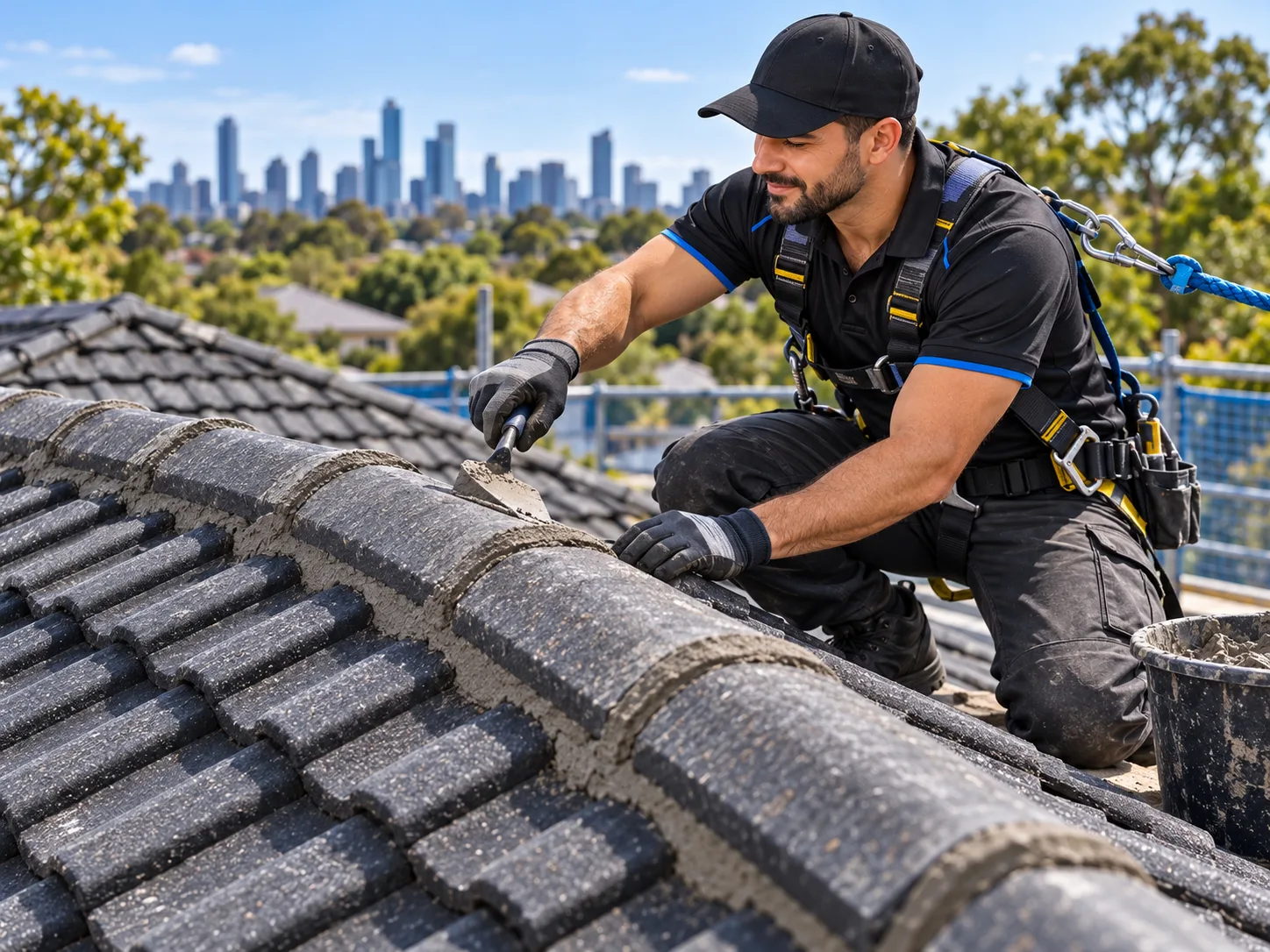
A damaged tile, ridge joint or flashing may need targeted work where the surrounding roof remains suitable. A roof repair assessment defines the affected area and whether anything else needs a closer look.
Restore a suitable existing covering.
Restoration retains the covering and brings preparation, repairs and any suitable finish into the agreed scope. A concrete-tile coating approach should not automatically be applied to terracotta or metal. Review the roof restoration scope before comparing it with replacement.
Replace the covering when that is the agreed scope.
Replacement introduces a new covering. Removal, the related roof details and access have to be planned together. Compare roof replacement in Melbourne with a repair or restoration proposal on the work included, not on how new the finish looks.
What an inspection can help clarify.
An inspection is how a local fault is separated from a covering that should not be coated or patched over. It covers the surface you can see from the ground and the details a ground photo misses: ridges, valleys, flashings, penetrations and the way water is meant to leave the roof. Some areas may not be safely accessible. Those limits belong in the notes.

Restoration or replacement at a glance.
| Factor | Repair | Restoration | Replacement |
|---|---|---|---|
| Condition | A defined fault. The surrounding covering still looks suitable to keep. | The covering is suitable to retain. | The covering is worn, or keeping it is no longer the agreed path. |
| Scope | Targeted work on the affected area. | Preparation, repairs and a suitable finish, as written. | Removal and a new covering, with the related details and access. |
| Materials | Existing covering retained. | Existing covering retained. The finish has to suit that material. | New covering. Tile and COLORBOND are separate pathways. |
| Disruption | Generally limited to the fault and the access it needs. | Depends on preparation, the finish and access. | Generally the larger scope. |
Questions to ask before choosing.
- Is the fault local, or is the same failure showing across the roof?
- What is the covering now, and does the proposed finish suit that material?
- What is included in the written scope, and what is left out?
- If the covering is being replaced, what has to be removed, matched or accessed?