

Key takeaways
- Most of this argument happens on 1970s, 80s and 90s concrete tile roofs across the east, the north and the outer west.
- A maintained concrete tile roof is quiet in rain, familiar to every trade who will work on the house later, and heavy in a way the frame was built to know.
- Colorbond wins when the concrete is finished, the pitch suits the profile you are actually buying, the frame has been seen and can take the new roof, and planning rules do not lock the street to tile.
General guidance for Melbourne roofs. The written scope after an assessment decides the work.
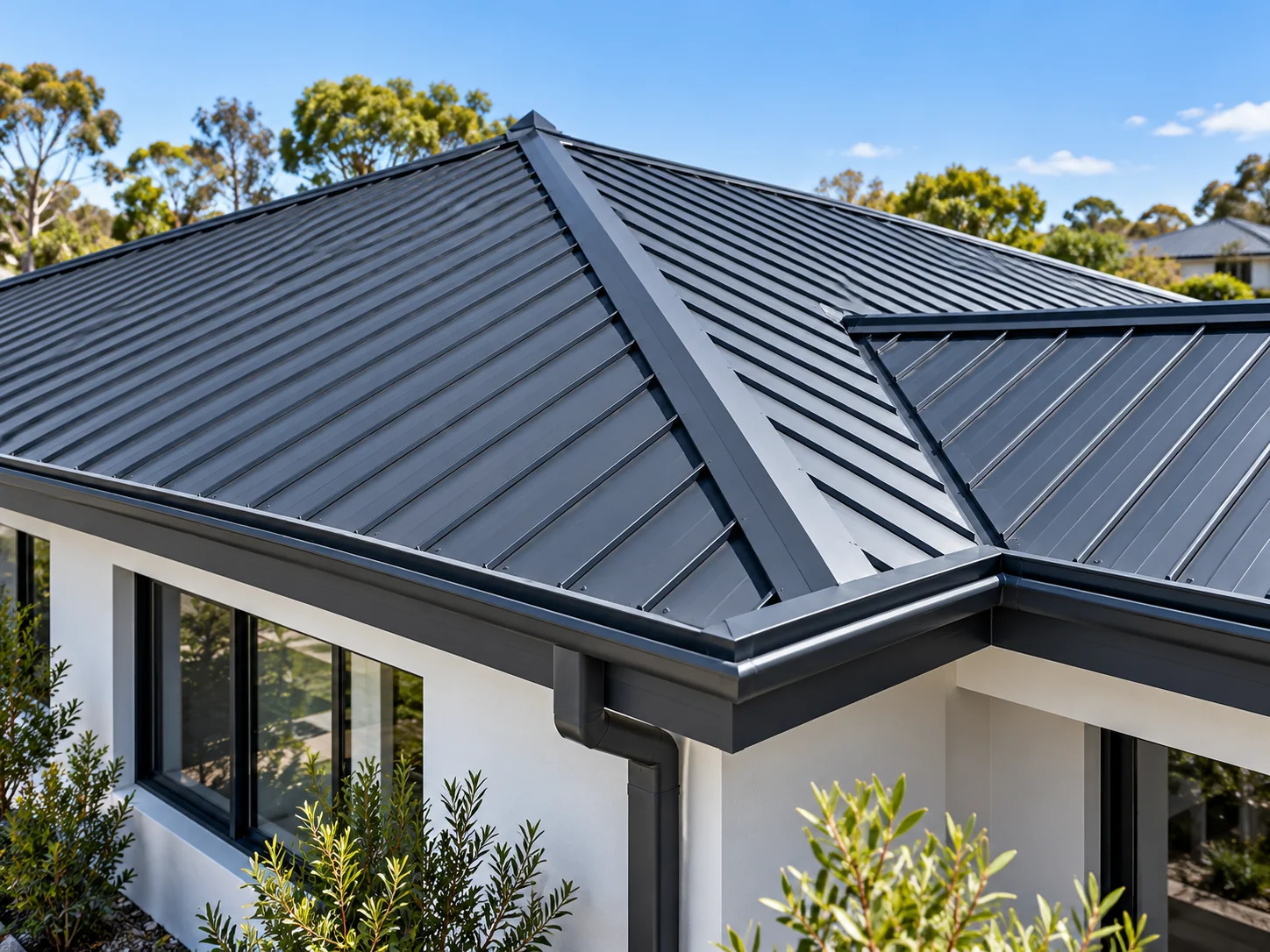
Start with the tile you already have
Most of this argument happens on 1970s, 80s and 90s concrete tile roofs across the east, the north and the outer west. The tiles have a body. If that body is still hard, the ridges may be powder, a dozen tiles may be cracked, and the valleys may be tired, and the roof can still be the same roof. That is a repair or a restoration. It is not a referendum on Colorbond. If the body is fretting, the edges are sugaring, and tiles break under a careful foot, the covering is finished. Then, and only then, the next covering is a real choice: new concrete tile, or Colorbond, or sometimes terracotta where the street and the budget say so.
Roof Revival Melbourne inspects that body before talking about profiles and colours. A driveway conversation that starts with “everyone is going metal” has skipped the only fact that saves you money. Restoration of a standard home, when the tiles qualify, often sits around $4,000–$12,000. Replacement commonly starts from about $20,000. The gap is the reason the verdict on the tile matters. The job, when replacement is actually the outcome, is roof replacement in Melbourne.
Concrete tile and terracotta are not the same product, even though both are “tile” from the footpath. This page is about concrete. Concrete frets and holds water in a porous face. Terracotta is a fired clay with its own matching problems. A quote that treats them as interchangeable will mis-specify both the restore and the replacement. Ask which one is on the house before you compare it with a steel sheet.
What concrete tile still does well
A maintained concrete tile roof is quiet in rain, familiar to every trade who will work on the house later, and heavy in a way the frame was built to know. Mass in the covering is not insulation, but the roof does not ring the way a bare sheet can, and the ceiling conversation is different. Broken units can be swapped when a match exists. Ridges can be re-bed. A coating, after the mechanical work, can give a tired but sound face another long period. None of that is true once the tile has become friable. You cannot restore powder.
The weaknesses are also ordinary and local. Pointing lets go in eastern summers and opens in winter wet. South pitches grow moss and stay damp under trees in suburbs such as Blackburn and Mount Waverley. Valleys clog with eucalypt litter. A previous spray coat peels because it was paint on dirt. Those are reasons to fix the system. They become reasons to change material only when the tile itself has finished. If a company only sells metal, every one of those faults will be narrated as a reason to strip. Ask them to price the restore as well. If they cannot, you do not yet have a comparison.
What has to be true before Colorbond wins
Colorbond wins when the concrete is finished, the pitch suits the profile you are actually buying, the frame has been seen and can take the new roof, and planning rules do not lock the street to tile. It also wins, for some owners, when they want the lower weight and they accept a different rain note, a different flashing trade, and a roof space that must be insulated and ventilated on purpose. The sheet does not bring those things with it. They are lines in the quote. Leave them out and the new roof will be blamed for heat and noise that the ceiling and the blanket were meant to handle.
Pitch is the technical gate. Concrete tile was laid on roofs that a low-pitched metal profile may not be allowed to cover. A rear skillion, a boxed gutter, or a shallow hip needs the profile’s minimum fall checked, not assumed. Flashings at brick walls and chimneys are rebuilt for sheet, not reused from the tile soakers and aprons if those details do not suit. Gutters may need to change. Solar brackets from the tile roof rarely transfer. If the quote is only “tiles off, Colorbond on”, those lines are still unpaid somewhere.
Street rules are the other gate. Plenty of Melbourne concrete tile roofs sit under no interesting overlay and can change material without a planning fight. Others sit in areas where the roof is part of the character the scheme protects. We will not promise a colour and a profile on a street we have not asked that question about. A building permit question is separate again, and it depends on the structural work, not on the brochure. Where a surveyor is required, the scope they see should be the scope you signed.
Heat, noise and the things the sample cannot show
People expect Colorbond to be hotter and louder, and concrete tile to be cooler and quieter. Sometimes that is what the house does. Often the difference is the roof space. A tiled roof with torn sarking and no insulation can be a hot box. A metal roof with a proper blanket, a ventilated space and a decent ceiling can be the calmer room. Comparing a neglected tile roof with a fully specified metal roof is not a material test. Comparing a restored tile roof with a metal roof that omitted insulation is not a material test either. Specify both properly, then choose.
Rain noise is real on metal when little sits between the sheet and the plaster. If that will bother the bedrooms, say so before the tiles are gone. The difference is in the build-up, and it belongs in the quote.
How to read two quotes that name different materials
Put them side by side only if they assume the same facts. Both should say whether the existing tiles are sound. Both should mention battens, sarking, valleys, gutters and flashings. The metal quote should name the profile and the pitch check. The tile quote, if you are replacing like for like, should name the tile and the ridge system. A metal quote at a sharp price that excludes gutters, and a tile restore that includes ridges, are not alternatives. They are different shopping lists. Choose after the lists match the roof you have.
Access sits on both lists. A two-storey hip costs more to strip than a single-storey house with a side driveway, whichever material goes back. If one quote has scaffold and the other hopes for a ladder, you are comparing who intends to finish the high hips.
If cement sheet turns up in a lean-to when the tiles come off, that is not a concrete tile and it is not Colorbond. Suspected asbestos sheet waits for a licensed removalist. We do not remove it and we do not describe how. The material decision for the main roof continues once that area is someone else’s finished work.
A decision you can defend
Keep concrete tile when the body is sound and the faults are ridges, broken units, valleys and a face that can be prepared. Move to Colorbond when the body is finished, the pitch and the planning rules allow it, and the quote includes the roof space, the flashings and the gutters, not only the sheet. Move to a new concrete tile when you want the same kind of roof and the match and the weight suit the house. Any of those can be the right job. The wrong job is a new material chosen because the last coating peeled, or a restore sold on tiles that crumble in the hand.
Send photos of a broken edge, the ridge, and the street face, plus the suburb and storeys. We will say which of the three paths the roof is actually on. The sample board can wait until that sentence is true.
What we compare on site
- 1. Test whether the concrete tile body is still sound
- 2. Price a restore if it is, a replacement if it is not
- 3. Check pitch, frame and overlays before metal is promised
- 4. Include sarking, insulation, gutters and flashings in the comparison
- 5. Name one material in the scope you sign