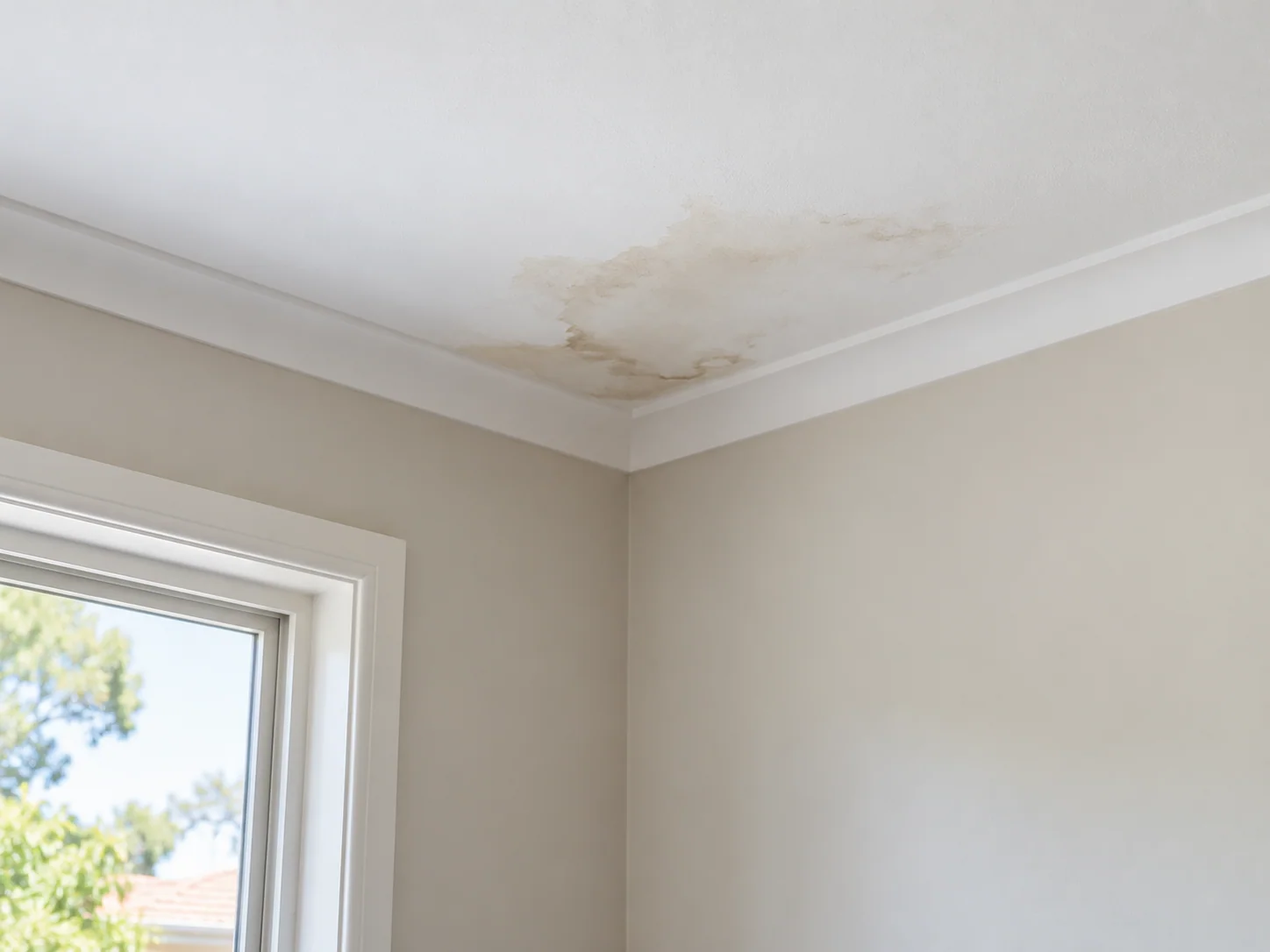
Key takeaways
- Pierce-fixed corrugated and similar profiles leak at the fastener more often than they leak in the middle of a sound pan.
- One sheet can be creased by a fallen limb, holed by rust at a leaf dam, or dented where someone walked the pan.
- Sometimes the pans are fine and the overlap is not. Capillary rust along a side lap, or an end lap that has thinned where water sat, means the joint itself is the failure.
General guidance for Melbourne roofs. The written scope after an assessment decides the work.
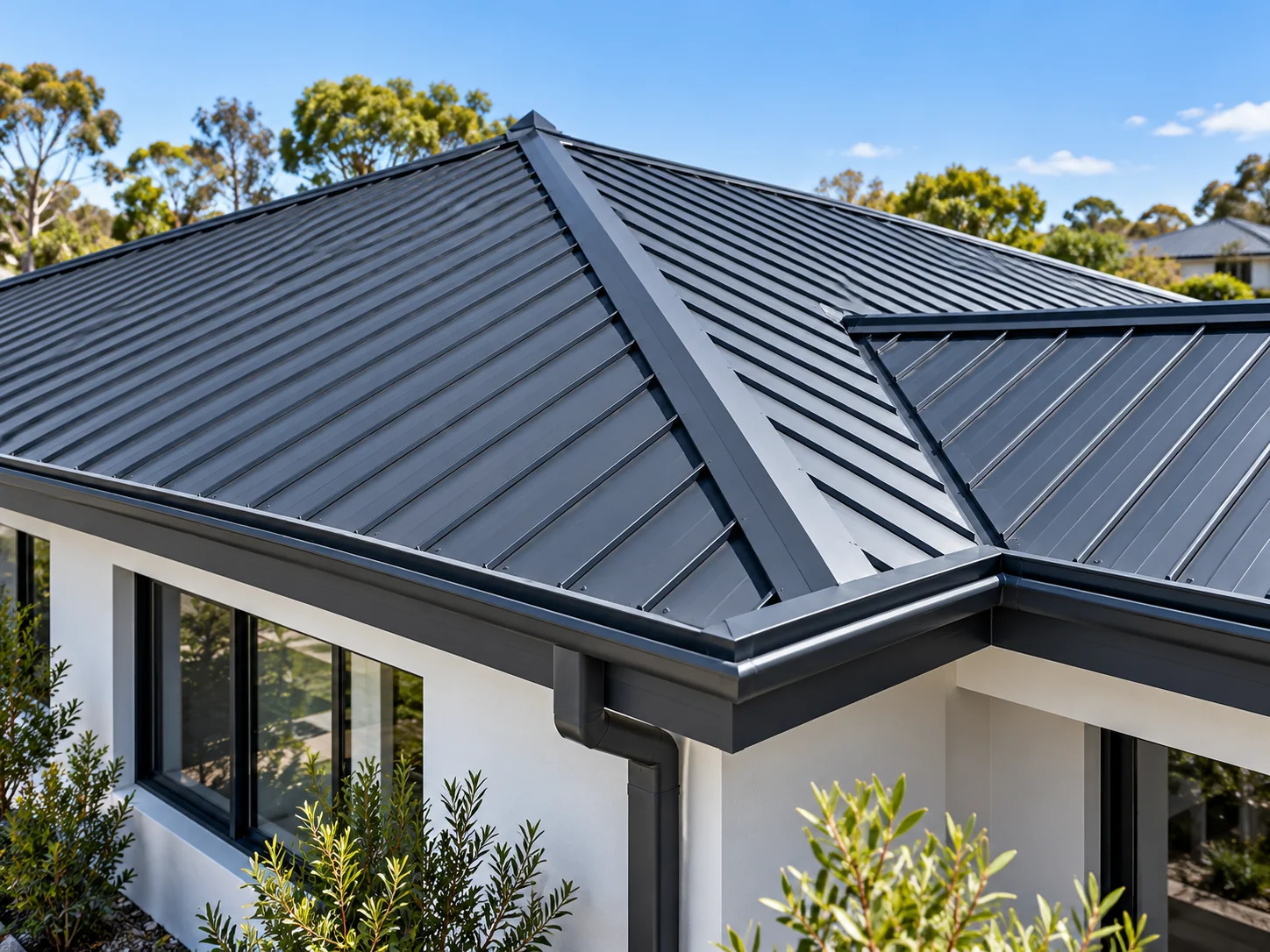
Start at the screw
Pierce-fixed corrugated and similar profiles leak at the fastener more often than they leak in the middle of a sound pan. The screw backs out in the heat, the washer splits, and the next northerly drives rain through a hole that was drilled on purpose. If the sheet around that hole is still coated and still thick, the repair is the fixing: the right screw, a washer that suits the profile, and a check that the hole has not ovalled into something a washer cannot cover. Doing every tired washer on a slope can be the whole visit. It is still a screw repair. The service is roof repairs in Melbourne.
A screw repair stops being honest when the steel under the washer is rusted to a crater, or the hole has torn. Bigger screws in a soft hole chase the leak across the pan. Sealant dabbed on the head is a dry-day disguise. We look under the washer, not only at the colour of the cap. On bayside roofs the washers perish sooner, and the same street’s flashings are often in the same condition. The repair list should mention aprons and barges if they are open. A perfect screw line beside a split flashing is a dry fastener and a wet wall.
A sheet, when one bay is finished
One sheet can be creased by a fallen limb, holed by rust at a leaf dam, or dented where someone walked the pan. If the sheets either side still have their coating, the repair is to unlap the failed sheet and fit a match. Profile matters. A near-enough corrugated does not sit in an older gauge, and a Colorbond replacement sheet in the wrong colour will shout from the street even when it is watertight. We name the profile and the colour we can actually get. Lead time is part of the repair, not an apology after you have waited in a bucket.
The lap onto the sound sheets has to be the original overlap, fixed so water cannot run sideways into the joint. A sheet repair that is screw-fixed through the side lap “to be sure” can create the next leak. Concealed-fix roofs are a different operation: clips, not a screw through the pan, and a repair that may mean opening more of the run to release one sheet. We say that before the day. Calling every metal roof “a few screws” is how a clip system gets ruined by a well-meaning drill.
A full lap, when the joint is the leak
Sometimes the pans are fine and the overlap is not. Capillary rust along a side lap, or an end lap that has thinned where water sat, means the joint itself is the failure. Replacing screws in the middle of the sheet leaves that line open. The repair opens the lap, cuts back to sound steel, and remakes the joint with the cover and the fasteners the profile needs. On a long run that can be many metres. It is still a repair of the lap, not automatically a full re-roof, as long as the rest of the sheet has thickness and coating.
Leaf-filled pans create this pattern. A tree over a north light, a box gutter that never gets cleared, a valley tray that holds silt: the steel fails where the water rested, in a line. We will repair the line. We will also say that the same corner will return if the leaf load is part of the building. That is a maintenance fact, not a second repair disguised as a coating. We do not paint the lap and call it closed. Paint does not replace thickness.
When the sheet is already lace
Older galvanised garages and skillions are often past a neat screw repair. The zinc is gone, the sheet is perforated at the laps, and every washer sits in lace. We will still do a local patch when the house needs one dry month and the owner knows it is a patch. We will not describe that patch as a twenty-year roof. If the eaves or a rear skillion look like asbestos cement, we identify it and stop. A licensed removalist does that work. There is no homeowner sequence in this article for taking it off.
What we will not call a repair
A wash is not a repair. A can of roof paint over rust is not a repair. We do not publish a coating method for weekends, because a film on active rust and loose washers fails, and it hides the screw, sheet or lap decision. If the coating on a sound Colorbond sheet has faded and the steel is intact, that is a different conversation about whether a repaint has anything to protect. It is not the leak repair. The leak repair is mechanical.
A full replacement is the next name when sheets have failed across more than a local bay, the laps are thin on more than one plane, or the battens under a long leak have gone. We switch names in writing. Mixing “screw repair” pricing with a roof that needs new sheets is how the day doubles and the trust goes. Roof Revival Melbourne photos the fastener, the sheet and the lap, and the quote uses one of those three words on purpose. Send suburb, storeys and a photo of the stain plus one of the roof. We still have to stand on it.
Typical metal repair decision
- 1. Find the wet line and the fitting above it
- 2. Check washers and whether the hole is still round
- 3. Check the pan for holes and the lap for rust
- 4. Quote screws, one sheet, or the failed lap
- 5. Photograph the joint we closed