

Key takeaways
- Owners of metal roofs in Melbourne tend to ring with a single word: the roof.
- Rain on a thin sheet is impact. Tiles have mass and an irregular underside, so the same shower sounds softer in the room.
- In a Melbourne winter the sheet gets cold. Air from showers, cooking, drying clothes indoors, and simply from people, rises through the ceiling.
General guidance for Melbourne roofs. The written scope after an assessment decides the work.
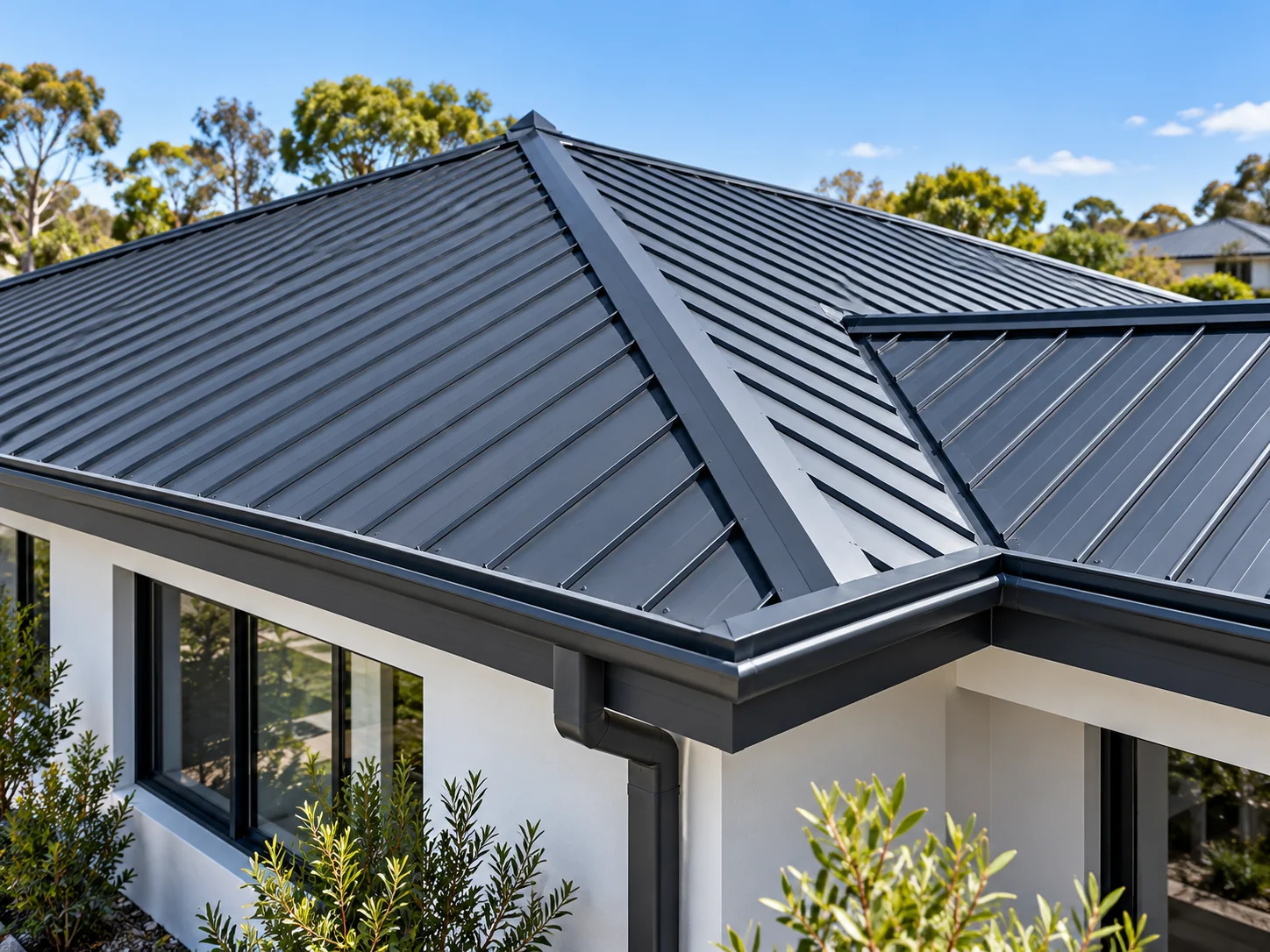
Three complaints that get collapsed into one
Owners of metal roofs in Melbourne tend to ring with a single word: the roof. Under that word we hear three different things. The first is ordinary rain noise, louder than the concrete tiles that used to be there, or louder than the neighbour’s tiled house. The second is a tick, a creak or a bang as the sheet heats and cools. The third is water, either during rain or, more confusingly, when the sky has been clear. Those are not one fault. A new roof will not automatically cure all three, and a repair to a screw will not cure the ones that were never a leak.
The sheet is the outside. The ceiling, the blanket, the sarking and the air in the roof space are what the room actually lives under. Roof Revival Melbourne looks at both. If the sheet is sound and the complaint is noise or winter moisture, the work may be in the build-up, not in a replacement. If the sheet is finished as well, the replacement can include the build-up that the old roof never had. That replacement is Colorbond roof replacement in Melbourne. It commonly starts from about $20,000, which is a poor price to pay for a noise that insulation would have changed.
What rain noise actually is
Rain on a thin sheet is impact. Tiles have mass and an irregular underside, so the same shower sounds softer in the room. Metal has less of that mass. If the sheet is fixed over battens with no blanket, the sound has a short path to the plaster. That can be startling in the first winter after a tile-to-metal change, especially in bedrooms on the upper floor. It is not, by itself, evidence that the roof was installed badly. It is evidence that the build-up was specified as a covering only.
A blanket and a ceiling with some density take the edge off. They do not make metal sound like tile, and anyone who promises that is overselling. They do make the difference between a roof you notice in every shower and a roof you notice only in a downpour. If you are still on tiles and noise is the reason you hesitate about metal, say so before the strip. The quote can include the layers that make the house liveable. If you are already on metal and the noise is new, ask what changed. A blanket that was soaked and removed, a ceiling that was opened for lights, or a sheet that has come loose and is drumming, are different from “metal is always like this”.
A rattle from a loose flashing or a ridge is a roof fault. A tick as a long sheet heats and cools can be ordinary movement. “It is noisy” is not yet a scope. Say whether you mean rain, heat, or something loose.
Condensation is water the house made
In a Melbourne winter the sheet gets cold. Air from showers, cooking, drying clothes indoors, and simply from people, rises through the ceiling. If it reaches a cold sheet or a cold underside of sarking, it condenses. The water then drips onto insulation, battens or plaster. Owners understandably call that a leak. The test is the weather. If the ceiling wets on clear, cold nights and stays quiet through a mild rainy day, start with moisture and ventilation, not with a story about a hole. If it wets only in rain, and especially in wind-driven rain, start with a leak path: screws, laps, flashings, valleys.
Both can exist. A small leak wets a batten, and winter condensation wets the same roof space a different way. The inspection should say which stains have a path from outside and which do not. Exhaust fans that dump into the roof space, rather than through the roof, are a frequent contributor in older houses that were later closed up with new windows. We are not asking you to redesign the bathroom from an article. We are saying the roof quote should not ignore a fan that is blowing steam at the underside of the sheet. Downlights that puncture the ceiling do the same job more quietly, by giving moist air a hundred small doors.
Sarking changes where the water appears. With no sarking, drips fall straight through. With sarking, condensation can form on the underside and run to a low point, so the stain is nowhere near the coldest part of the sheet. That misleads people into searching for a leak at the stain. Look at the underside, from a safe place, on a cold morning if you can do that without walking the ceiling. We will do the roof side. The pattern of widespread light moisture, rather than a single dirty trail from a penetration, is the condensation pattern.
What belongs to the roof contractor, and what does not
A split sheet, a failed washer, an open lap and a broken flashing are roof work. A missing blanket on a roof we are already replacing is roof work, because the strip is the chance to put it in. A ventilation detail at the ridge or the eaves, specified with the new roof, is roof work. A household that is pouring moisture into a closed roof space may also need a fan ducted outside, which is not something we pretend a sheet of Colorbond will solve after the fact. We will name the limit. We will not sell a re-roof as a dehumidifier.
If the metal is sound, do not strip it to chase noise or condensation. Add the layers and the air path that are missing, where that can be done without a fiction about easy access. Some ceilings make that practical. Some roof spaces are too tight, and the honest moment is the next time the sheet comes off. If the metal is rusted through, the noise and the moisture are beside a replacement you needed anyway. Then the new roof should be specified so you do not buy the same bare sheet twice. Insulation, sarking and a way for air to move are the lines that stop the second complaint.
How to describe it so the visit is useful
Tell us whether the noise is rain, heat, or a rattle on windy nights. Tell us whether the water appears in rain or on cold clear mornings. Tell us if the house was recently sealed up, if fans vent into the roof, and if the roof was tiles a few years ago. Those sentences point to the ceiling or to the sheet before we are on the ladder. Photos of a stain help. A note of the last time it rained helps more.
We will not hand you a method for laying blanket or for cutting vents. Those are specified and installed as part of a roof job when they belong in it, not copied from a page onto a Sunday. If cement sheet is in part of an old roof and moisture has been sitting on it, suspected asbestos material is left for a licensed removalist. We do not remove it and we do not describe removal. The diagnosis of noise and condensation on the metal continues around that limit.
You should leave the inspection knowing which sentence is yours. The roof is leaking at a detail. The roof is loud because the build-up is thin. The roof space is condensing because moisture and cold metal are meeting. Or the sheet is finished and a replacement is the chance to fix the build-up as well. One of those sentences is enough to act on. “Metal roofs are just like that” is not a sentence we use.
How we separate the causes
- 1. Ask when the noise or the water happens
- 2. Check the sheet for a real leak path
- 3. Look at blanket, sarking and how wet the space is
- 4. Say ceiling, repair, or replacement in plain words
- 5. Put insulation and ventilation in any new roof scope