Key takeaways
- People use “metal roof” for several products that do not age the same way.
- Colorbond that has chalked on the north and west, but has not holed, qualifies if the screws still have something solid to bite and the laps have not opened.
- Perforation is the clear stop. Pinholes along the eaves, a screw line that has become a rust slot, or a lap that has thinned until daylight shows through, are replacement facts.
General guidance for Melbourne roofs. The written scope after an assessment decides the work.
Restoration is a verdict on the steel
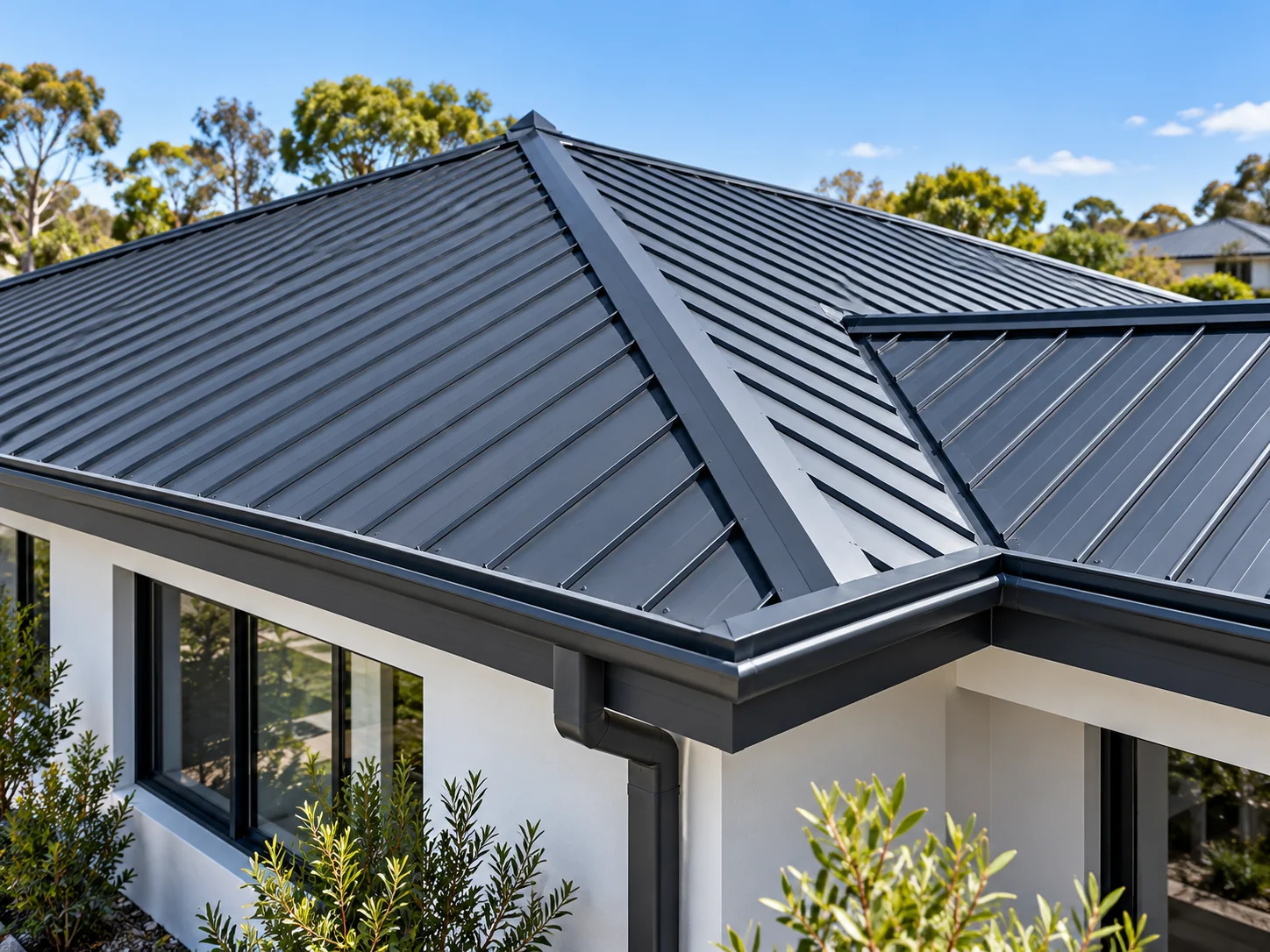
People use “metal roof” for several products that do not age the same way. Colorbond is painted steel. Zincalume is a coated steel that was often left unpainted. Older galvanised corrugated iron is a different metal history again, common on rear skillion additions in Preston, Coburg and Footscray, and on sheds that were later joined to the house. A restoration can be honest on the first two when the sheet still holds together. It is rarely honest on galvanised that has already gone to red rust through the corrugation. The question is not whether the roof is metal. The question is whether there is enough metal left to carry a new face and keep water out.
Roof Revival Melbourne walks that distinction before a coating is named. A sound sheet with a tired finish is a restore. A soft sheet is a replacement, even if a brochure still calls the work restoration. We would rather say the shorter word on site than discover it after the invoice. The service page for this work is roof restoration in Melbourne. What follows is what that job can include, and what it cannot pretend to fix.
What still qualifies
Colorbond that has chalked on the north and west, but has not holed, qualifies if the screws still have something solid to bite and the laps have not opened. Zincalume that has dulled, spotted at fasteners, or stained at the eaves can qualify on the same test: continuous sheet, laps that can be secured, cut edges that are surface rust rather than lace. A dent from an old hail day does not automatically end the roof. A split at the dent does. Penetrations matter as much as the field. A flue, a whirlybird, a skylight collar or a solar bracket can be the only failure on an otherwise sound plane. Those details can be repaired inside a restoration scope, or they can be the whole job if the field is fine. We write which one it is.
Fasteners belong in the “can be restored” list only when the batten behind them still holds. A screw that spins in rotten timber is not a washer problem. It is a structure problem, and coating the sheet will not give the screw a home. On many 1990s and 2000s metal roofs in the outer east and the west, the battens are still serviceable and the washers are not. That is a favourable restore. On a low-pitched skillion where water has sat in the lap for years, the batten can be the tired member and the sheet can look better than it is. The manhole, where it is safe to use, is part of the inspection for that reason.
Small surface rust at a cut edge can be part of preparation when the surrounding sheet is thick and continuous. That is a judgement made in the hand, not a slogan. If the edge crumbles, the judgement has already failed and the sheet is leaving the restore category. We do not describe a home method for treating that edge. Preparation is our work, on a roof we have agreed is sound enough to receive it.
What cannot be restored
Perforation is the clear stop. Pinholes along the eaves, a screw line that has become a rust slot, or a lap that has thinned until daylight shows through, are replacement facts. Older galvanised that sheds red scale onto the gutter is usually in that group, even when a few pans still look grey from the street. Painting scale is how a roof looks managed for one season and leaks in the next heavy rain. We will not call that a restoration to keep a smaller invoice alive.
A previous coating that is peeling in sheets is a warning, not an invitation to coat again. The first film failed for a reason: poor preparation, a product that did not suit the metal, or steel that was already finished. Adding another film stacks the failure. If we cannot get back to a sound face, the honest line is replace. Lead flashings that have split, mismatched patches of unidentified sheet, and cement sheet used as a cheap infill are also outside a metal restore. Cement sheet that may contain asbestos is named and left. Removal is a licensed removalist’s trade. We do not remove it and we do not explain how to take it off. The metal that remains is quoted only if it stands on its own.
Melbourne weather changes the timing, not the test
Salt air along the bay shortens washer life and bites cut edges. A metal roof in Altona or Parkdale can need fastener work years before the same profile in a sheltered northern suburb. Dust off the western plains sands the face and sits in any coating that is applied over it. Tree litter in the inner east holds moisture in laps and gutters, so a sound sheet still leaks at the overflow and gets blamed for a gutter fault. Summer hail along the eastern corridor dents. None of these is a reason to restore a finished sheet, and none of them is a reason to replace a sound one because it looks dull in February.
If the pitch is too low for the profile, a coating will not invent fall. Valleys are listed when they are part of the leak, because a restored field over a tired valley still wets the ceiling.
What the quote has to be able to survive
A metal restoration quote that can survive a wet winter names the product on the roof, states that the sheet is continuous, lists the fastener work, lists laps and penetrations, and names the coating system only after those lines. It says what is excluded. It says if solar panels have to be moved and by whom. It says if access needs more than a ladder. Planning bands for a restoration on a standard home often sit around $4,000–$12,000. A large, steep, or two-storey roof, or one with a lot of failed fixings, moves inside that band or out of restoration entirely. We do not invent a tighter number from a street photo.
Compare that quote with a wash, and with a replacement, on the same inspection. A wash is dirt. A restore is a system on sound metal. A replacement is new sheet because the old sheet is finished. Mixing the words is how people pay twice. If you already have a coating quote with no comment on screws, treat it as incomplete, not as a bargain. The missing lines are usually where the leak lives.
After the decision
If the roof qualifies, the work is sequential: make the fixings and details sound, prepare the face properly, then coat. Skipping to the coat is how a restore becomes a two-year paint. If the roof does not qualify, we stop. Partial painting of the street face, leaving the rear pans to rust, is not a compromise we recommend. Water does not prefer the elevation the neighbours see. You should leave the inspection with one of four words: wash, repair, restore, or replace. Anything vaguer is not a scope.
Send the suburb, the storeys, and two photos, including one of a screw line if you can take it safely from the ground or a balcony. We will tell you whether an inspection is likely to end in a restore. We will not promise the coating before we have had our hands on the sheet.
How we decide
- 1. Identify the metal, not just the colour
- 2. Test whether the sheet, laps and battens still hold
- 3. List fasteners, cuts and penetrations in the scope
- 4. Quote a restore only if the steel qualifies
- 5. Say replace, plainly, when it does not