

Key takeaways
- Owners ring after a pressure wash because the roof looked tired and someone said a clean would bring the colour back.
- Restoration has a stop. If the sheet is perforated, if rust has eaten through at the eaves or under a failed screw line, or if the laps have opened and the metal feels thin, a coating is a film over a hole.
- Colorbond leaks at fixings before it leaks through the middle of a pane.
General guidance for Melbourne roofs. The written scope after an assessment decides the work.
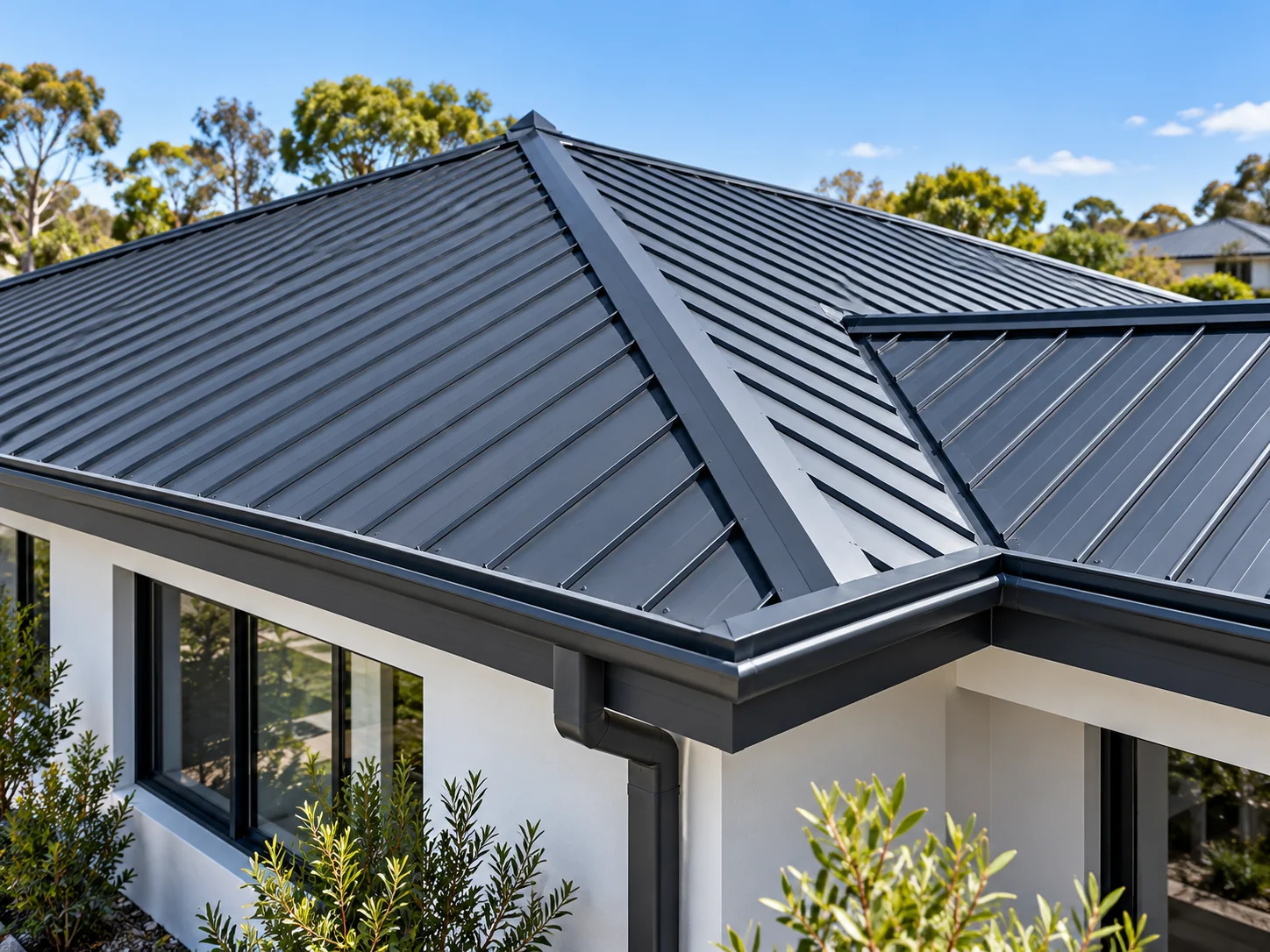
A wash leaves the coating where the sun left it
Owners ring after a pressure wash because the roof looked tired and someone said a clean would bring the colour back. On a chalked Colorbond roof the wash does take the grime off. What remains is the factory film in the state the weather left it. North and west pitches in Point Cook, Tarneit and Craigieburn chalk first, because the afternoon sun sits on them. The powder comes off on a finger. The sheet underneath can still be continuous. That is the moment a wash stops being the product you need. Restoration is the work that deals with the coating, the fasteners and the small rust at cuts, while the steel can still carry a new face. Roof Revival Melbourne will not sell the wash under the restoration name so the invoice sounds larger than the work.
Dirt, lichen in a shaded lap, and chalk are three different things. Dirt sits on the sheet. Lichen holds moisture in the joint. Chalk is the coating itself breaking down into powder. A wash can move the first. It does not reset the second or the third. If a quote is a day with a cleaner and no sentence about screws, cuts or the edge of the sheet, you are buying a clean. Read it as a clean. A clean can be the right small job on a young roof that is only dusty. It is the wrong job on a roof whose colour has already left the metal.
What a Colorbond restore is allowed to include
A restore on sound Colorbond starts on the roof, not with a colour chart in the driveway. We look at screw lines, the condition of the washers, the laps, the penetrations, and any cut edge around a flue, a skylight or a valley. Where a ceiling manhole lets us, we look underneath, because a stain tells you whether water has already been through a fixing. If the sheet is still a sheet, the scope can include fasteners made sound, rust at cuts treated as part of preparation, and a coating system named for that metal. Preparation belongs in our scope. It is not a weekend method for a handy owner. We do not publish a home coating recipe, and we do not coat over a film that is still loose or over dust that was never taken off.
Gutters, valleys and flashings are written in when they are part of the leak. A restored sheet over a split valley is a tidy roof that still drips into the same corner. The quote should say what is included and what is a separate line, so you are not discovering the valley after the coating is booked. Planning for a standard home often sits around $4,000–$12,000. That is a planning band for a restoration, not a price read off your suburb name. Storeys, roof size, access and how much fastener work is real will move the figure. A two-storey hip with solar panels is not the same job as a single-storey gable with a clear walk-up.
When the steel has already finished
Restoration has a stop. If the sheet is perforated, if rust has eaten through at the eaves or under a failed screw line, or if the laps have opened and the metal feels thin, a coating is a film over a hole. We will say replace. A warranty on a paint does not rebuild missing steel, and it does not forgive a scope that never mentioned the hole. The same honesty applies where the roof has been coated once already and the previous film is peeling in sheets. A second coat on a failed coat is how the complaint in year two gets written. We would rather lose the restore than attach our name to steel that cannot hold it.
A split from hail is a sheet problem, and no wash will close it. Bayside salt attacks washers and cut edges faster than an inland roof of the same age. The suburb changes what we expect to find. It does not change the rule that the steel has to be sound.
Screws are the roof, not a footnote
Colorbond leaks at fixings before it leaks through the middle of a pane. The washer hardens, splits, or the screw backs out of the batten. You see a rust freckle at the head, then a line of them down the sheet, then a ceiling mark under that line. A wash does not replace a washer. A restore that ignores the fixing leaves you with a coloured roof and the same leak path. We put the fastener condition in the written scope. If only a run of screws has failed and the sheet and the coating are otherwise sound, that can be a repair rather than a full restore. We will say which one you are buying. Both answers come from the same inspection. Neither answer comes from a guess made on the nature strip.
What we will not call a restoration
We will not call a wash a restoration. We will not describe how to coat the roof yourself. A coating laid on dust, on chalk that was never removed, or on rust that is still active is how those roofs come back peeling, and a set of steps on a page would only invite that result. If a lean-to or a garage still has older cement sheet beside the Colorbond, that sheet is not this job. Removal of asbestos-containing sheet is work for a licensed removalist. Roof Revival Melbourne does not do that removal and does not set out how the sheets come off. The metal roof next to it is scoped on its own, and the cement sheet is named so it is not coated by mistake.
We also will not restore a roof we have not walked. Photos from the ground show fade. They do not show whether a screw still clamps the sheet to the batten. Send them anyway, with the suburb and the number of storeys, and we will say whether the next step is an inspection for a restore or a plain conversation about replacement. The service this article belongs to is roof restoration in Melbourne. The wash, when it really is only a wash, is a smaller conversation and should be priced as one.
What the inspection writes down
The note says wash, restore, repair or replace, and it says why. It names the pitches that have chalked, the screw lines that have let go, and any cut edge that is already rusting. It says whether the sheet is continuous. It says if access, a solar array or a steep hip changes the days on site. You should be able to read that page and know you are not paying restoration money for a clean. If the field is finished, the note says so before a coating colour is discussed. That order matters. Once a colour is chosen first, every later discovery feels like a variation. We would rather the discovery sit in the first document.
After a proper restore the roof still lives in Melbourne weather. Gutters fill, and a later trade can disturb a screw. That does not turn the original wash into the right product. If water shows inside, call before the plaster softens.
How the scope is set
- 1. Inspect on the roof and, where we can, from the manhole
- 2. Confirm the sheet is still continuous
- 3. Scope fasteners, cut edges, preparation and coating as one job
- 4. Quote the restore, or say replace if the steel is finished
- 5. Handover photos of the lines that were in the scope