
Checklist · Melbourne
Signs You Need Roof Restoration
Melbourne roofs take a beating — hot dry summers, heavy winter rain, and decades of moss growth on southern pitches. Catching problems early means restoration instead of emergency leaks or premature replacement. Use this checklist from ground level and in the roof space, then book a professional inspection if multiple signs appear.
12 Warning Signs
What to look for on your Melbourne roof
You do not need to walk the roof yourself — many indicators are visible from the street, gutter line or inside the ceiling space. If you tick three or more, schedule an on-roof assessment.
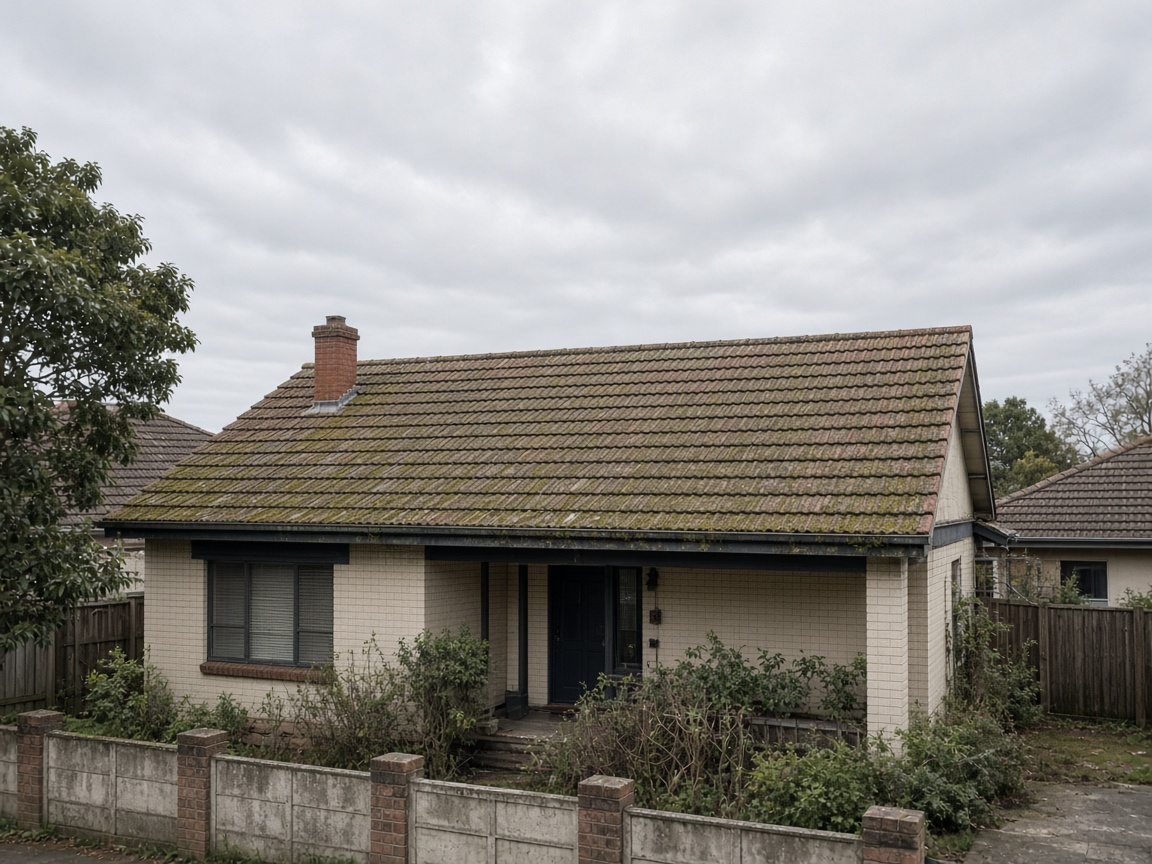
- 1. Visible moss, lichen or algae — green or black streaks on tiles, especially shaded south-facing sections. Biological growth holds moisture against the surface and accelerates tile deterioration. A professional roof clean is the first step, but heavy growth often indicates deeper prep is needed before coating.
- 2. Cracked, chipped or missing tiles — even a handful of broken tiles create direct water entry points. Melbourne frost cycles and foot traffic from prior trades cause cumulative damage.
- 3. Crumbling or missing mortar on ridge caps — ridge caps are the roof's first line against wind-driven rain. Mortar that falls away in chunks means re-bedding and repointing is overdue.
- 4. Slipped or lifted ridge caps — caps sitting out of alignment or visibly shifted indicate adhesive and mortar failure — not a cosmetic issue.
- 5. Interior ceiling stains or damp patches — brown rings on plaster after rain point to active or recent leaks. Trace the stain location to valley, flashing or cap failure on the roof above.
- 6. Peeling or chalky old roof coating — previous paint jobs that flake or look powdery have lost UV protection. Recoating without proper prep wastes money; restoration addresses substrate first.
- 7. Rust streaks on valleys or flashings — orange runs below metal valleys, chimney flashings or skylight surrounds mean corrosion is advancing. Valleys are high-flow leak paths.
- 8. Blocked or overflowing gutters — gutters full of granules, tile fragments or mud suggest the roof above is shedding material. Persistent overflow damages eaves and fascias.
- 9. Sagging or uneven roof line — visible dips or waviness may indicate batten rot or structural movement. Some cases need engineering assessment before restoration proceeds.
- 10. Daylight visible in the roof space — pinholes of light through sarking or between tiles confirm direct water paths. Check after rain for corresponding drips or damp insulation.
- 11. Increased energy bills or hot ceiling spaces — failing coatings and degraded sarking reduce thermal performance. Heat-reflective roof painting can help on metal; tile systems benefit from membrane restoration.
- 12. Roof age beyond 20–25 years without major work — most Melbourne tile roofs benefit from a full restoration cycle at this age: repoint, repair, clean and coat. Waiting until active leaks appear usually costs more.
Quick Checklist
Score your roof in five minutes
Walk your property boundary and check the roof space if safe access exists. Tick every sign you see:
- Moss or lichen covering more than 20% of visible tiles
- Any cracked, broken or missing tiles
- Mortar loss on ridge caps or gable ends
- Ceiling stains that appear or grow after rain
- Rust on valleys, flashings or screw lines (metal roofs)
- Previous coating peeling or visibly faded
- Gutters overflowing during normal rain
- No professional roof work in the last 15 years
0–1 ticks: Monitor annually; consider a maintenance clean.
2–3 ticks: Book inspection — partial restoration likely.
4+ ticks: Prioritise inspection soon; full restoration or replacement assessment needed.
Act Early
Why waiting costs more
Melbourne homeowners often delay roof work until a ceiling stain appears — by then water may have tracked across sarking, stained insulation and started timber decay in battens. Restoration at the first signs of mortar failure or coating breakdown typically costs far less than emergency leak repairs plus internal plaster work.
Early restoration also preserves your options. Once tiles become brittle across large areas or battens fail widely, replacement may be the only durable path. Compare typical spend in our restoration cost guide.
Roof Revival's approach follows three pillars: Clean. Restore. Protect. — diagnose honestly, fix the substrate, then apply a coating system matched to your roof type. We document before-and-after photos on every job so you can see exactly what changed.
FAQ
Restoration timing questions
Free Assessment
Spotted three or more signs?
Book a no-pressure roof inspection. Photo report, honest restore-vs-replace advice, and a written quote if work is needed.