
Colorbond / metal
$18,000 – $35,000
Typical single-storey metro home: strip, battens if needed, profile, flashings, ridges, compliant disposal. Steep or large roofs sit at the top.
Cost guide · Melbourne 2026
A new roof in Melbourne commonly starts around $20,000. Colorbond on a typical single-storey home often lands $18,000–$35,000. Concrete tile replacement sits higher. Roof Revival Melbourne will tell you if a restore still buys a decade — replacement is not the default recommendation.
Planning bands
Use these to budget. Your written quote follows strip-out assumptions, material, access and whether the frame is dry.
$18,000 – $35,000
Typical single-storey metro home: strip, battens if needed, profile, flashings, ridges, compliant disposal. Steep or large roofs sit at the top.
$22,000 – $42,000
New tile system, sarking, battens, valleys, pointing. Heavier material, more labour, more structural conversation.
$40,000 – $70,000+
Two-storey access, terracotta matching, engineering, custom flashings, or overlay constraints. Inner Melbourne and Bayside stock lives here often.
If the roof is still sound, read the restoration cost guide first. $4,000–$12,000 restore vs $20,000+ replace is the decision most owners actually face.
Inclusions
Replacement is a system, not a sheet swap. Compare these lines, not the bottom number alone.
| Line | Should be explicit | Watch for |
|---|---|---|
| Strip-out and disposal | Layers, skip, tip fees | Old roof “left for owner” |
| Asbestos process | If pre-1990 build, identification path | Silence, then a variation |
| Battens / frame repairs | Provisional sum or inspect-and-quote | Assumes perfect timber |
| Sarking / anticon | Product named | Optional after you have signed |
| Valleys, flashings, ridges | New, not reused rust | “Reuse if possible” |
| Gutters / downpipes | Included or a priced option | Assumed in the headline |
| Scaffold / edge protection | Yes on two-storey and steep | Cash extra on day one |
| Permits / surveyor | Who lodges, who pays | Owner surprise mid-job |
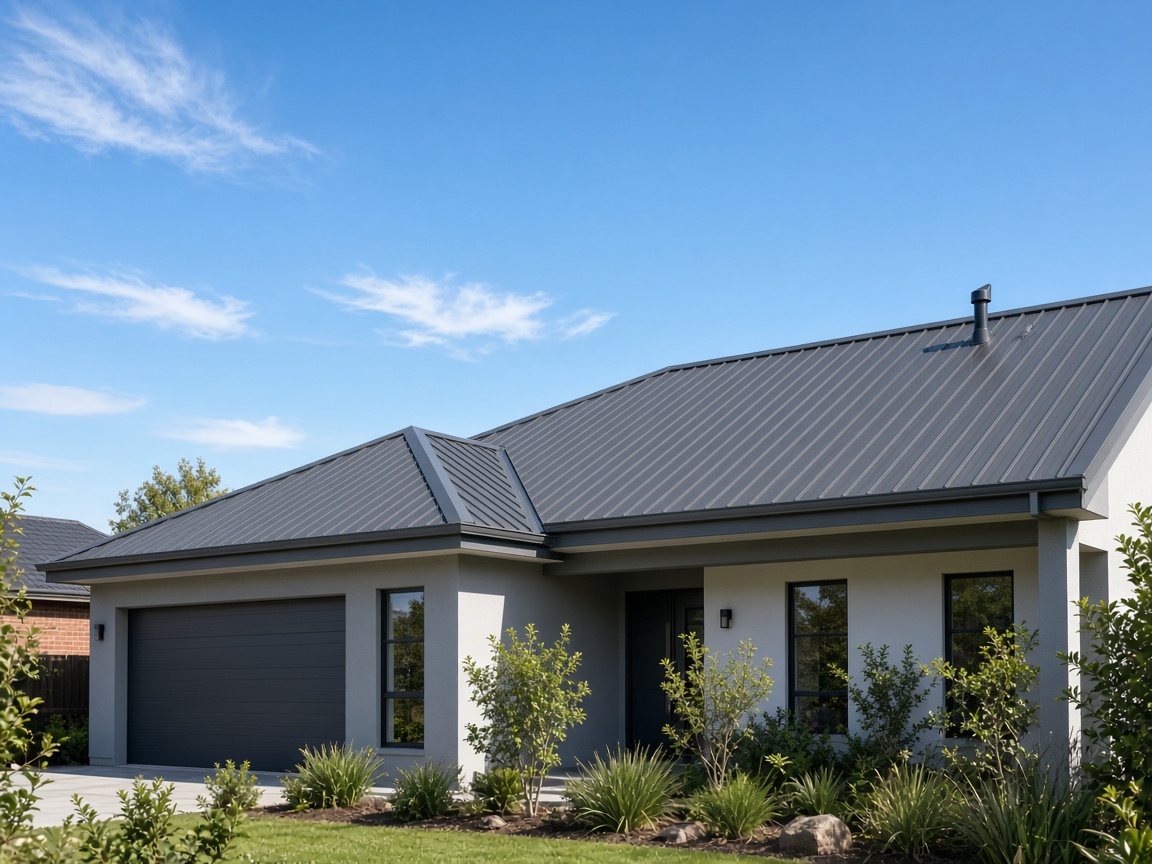
Cost factors
Timeline
A straightforward single-storey Colorbond job is often 3–5 working days on site once materials land. Tile replacement more often 5–8 working days. Add scaffold, custom colours, weather holds and inspections.
Lead-in of 2–6 weeks is normal for a proper crew. Custom Colorbond or a matching terracotta can add another 1–3 weeks. The scope should say when the roof is open, when noise peaks, and how we tarp if Melbourne rain arrives mid-strip.
Restore typically costs 40–60% less when the substrate is sound. That gap closes after two failed restore cycles, when more than about a quarter of tiles are unsalvageable, or when an engineer or insurer has already required a new system. Painting a finished roof is not a saving.
Read signs you need restoration if you are not sure which path you are on. The 2026 replacement notes sit beside this guide for year-stamped search.
Colorbond wins on weight, speed and many warranties. Tile still belongs on Edwardian and interwar streetscapes, and anywhere an overlay expects it. We will not sell a metal roof into a street that will fight you at council. That is not honesty and it is not cheaper once you redo it.
FAQ
Honest advice
Book an inspection. We will say restore, repair or replace — and we will say when replacement is the wrong spend.