

Key takeaways
- The useful question is not “which material is better in Melbourne?”.
- Tile sheds water by overlap and pitch. Drop the pitch too far and wind drives rain up the lap.
- Tile wins on a sound field, and it wins where the streetscape is the point.
General guidance for Melbourne roofs. The written scope after an assessment decides the work.
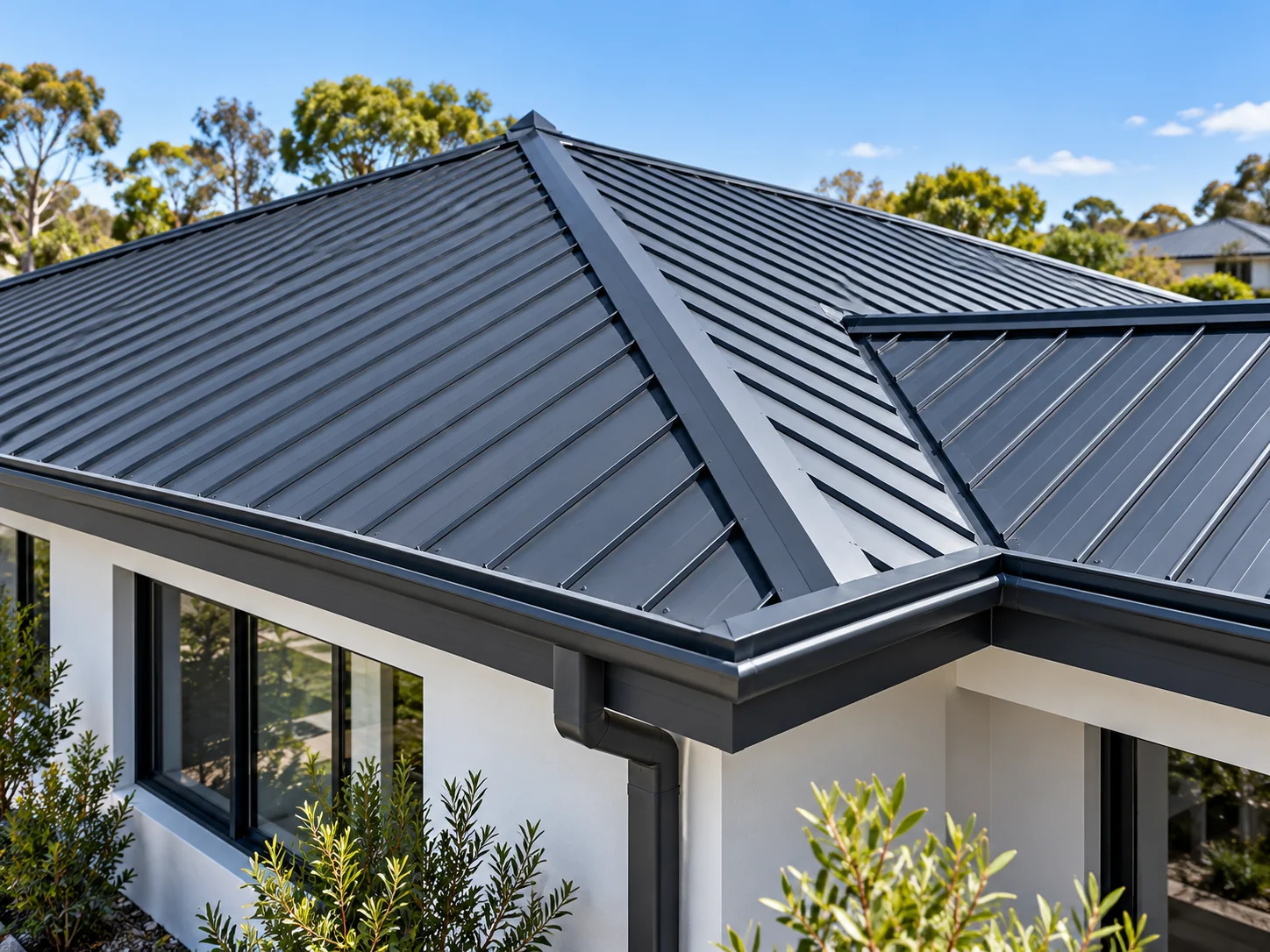
Metal wins when the tile field is finished
The useful question is not “which material is better in Melbourne?”. It is “what is left of this roof?”. Concrete tile across the east — Glen Waverley, Box Hill, Doncaster — often chalks and loses its ridge mortar while the unit itself is still hard. That roof wants bedding, swaps and a specified coating. Metal beats it when the body has gone: units crumbling in the hand, a field where broken tiles are the pattern rather than the exception, or a tile that has already been coated twice and is pitting through. At that point another face is a delay.
Terracotta can reach the same point more slowly. A Marseille roof in Hawthorn or Malvern may still have a sound body and a mortar problem. Metal beats that roof only when matching units are gone, the laps are tired across whole planes, or the owner has accepted a change of material the street will allow. Weight is a real advantage of sheet, and it is not a reason to strip a roof that still sheds water once the ridges are reset. Roof Revival Melbourne will say “keep the tile” in writing when that is the longer-lived spend.
Pitch, weight and the frame
Tile sheds water by overlap and pitch. Drop the pitch too far and wind drives rain up the lap. That is why so many rear skillions, studio roofs and low-pitch extensions were drawn in metal from the start. A sheet profile made for that pitch beats a tile detail that was never honest on the drawing. We measure the fall. A 1990s plan stamp is a clue, not a substitute for a spirit level on the rafter.
Steel sheet is lighter than a concrete tile field. On a house where the rafters were already working hard, that difference matters. It does not resurrect a batten that has rotted under a long-term valley leak, and it does not straighten a ridge board that has sagged. The inspect includes the timber we can see from the roof space. If the frame needs a carpenter before any sheet is ordered, metal has not “won” yet. It is waiting on the structure. We will not fasten a new lid to timber we would not trust with the old one.
Where tile still wins
Tile wins on a sound field, and it wins where the streetscape is the point. A heritage overlay, a neighbourhood character area, or a row of original terracotta will often refuse a metal change even when the owner is tired of mortar. A metal roof nearby, approved in a different year, is not a precedent you can borrow. We treat that as a planning question, not as a roofing dare. Keeping the tile, and doing the ridges properly, is the job that actually gets finished.
Tile also wins when the failure is local. A cracked unit over a bedroom, a slipped course above a gutter, a valley that has holed: those are repairs. Stripping the house to “upgrade to metal” spends a replacement budget on a leak that had an address. Walk the ceiling stain back to the fitting before you compare materials. If the rest of the field is hard and dry underneath, metal is a preference, not a diagnosis. Preferences are allowed. They should be priced as preferences, with the repair option written beside them so the household can see the gap.
What “metal” means on a Melbourne quote
In this city the metal roof people mean is usually Colorbond: pre-painted steel in a named profile. Zincalume is the unpainted base. Older galvanised sheet on a garage is a third thing, often near the end of its life at the screw line. Aluminium and other painted steels exist. A quote that says “metal” and stops there is not comparable with a quote that names profile, colour and flashing. Roof Revival Melbourne’s replacement path for that steel system is Colorbond roof replacement in Melbourne.
The same word hides the details that change the price. Concealed-fix versus screw-fixed, new gutters versus reuse, solar off and on, two storeys versus one, a simple hip versus a roof full of valleys and split levels. A standard metal replacement commonly starts around $20,000. A tile restoration, when the body is sound, often sits around $4,000–$12,000 for a standard home. Those bands are for planning. The invoice follows the inspect. Comparing a spray-on tile quote with a full steel replacement is how households pick the wrong winner.
Weather that punishes the wrong choice
How we call it on the day
We look at the tile in the hand, not only from the street. We look at ridges, valleys, flashings and the roof space. We ask whether a change of material needs approval. We say metal, restore, or a local repair. If more than a scattered portion of the field is soft, we stop talking about coatings. If the units are hard and the mortar is the storey, we stop talking about a new lid. The household can still choose metal as a preference when the rules allow it. They will see that it is a preference, with a price, beside the repair or restore the roof itself is asking for.
Typical inspect before a material decision
- 1. Read the tile body, the sheet, or both if the house is mixed
- 2. Check pitch, frame, valleys and penetrations
- 3. Check overlay and streetscape limits on a material change
- 4. Price restore or repair beside replacement
- 5. Recommend the roof that still has a reason to be there