Key takeaways
- The waterproofing on a tiled roof is the ridge and hip system, the valleys, the flashings and a sound lap.
- A coating will not bridge a crack in a useful way, and it will not turn a crumbling unit back into a tile.
- Even a hard tile with sound ridges will throw a coat off if the face is dust, chalk or a green film.
General guidance for Melbourne roofs. The written scope after an assessment decides the work.
Open ridges make a coat a lid on a leak
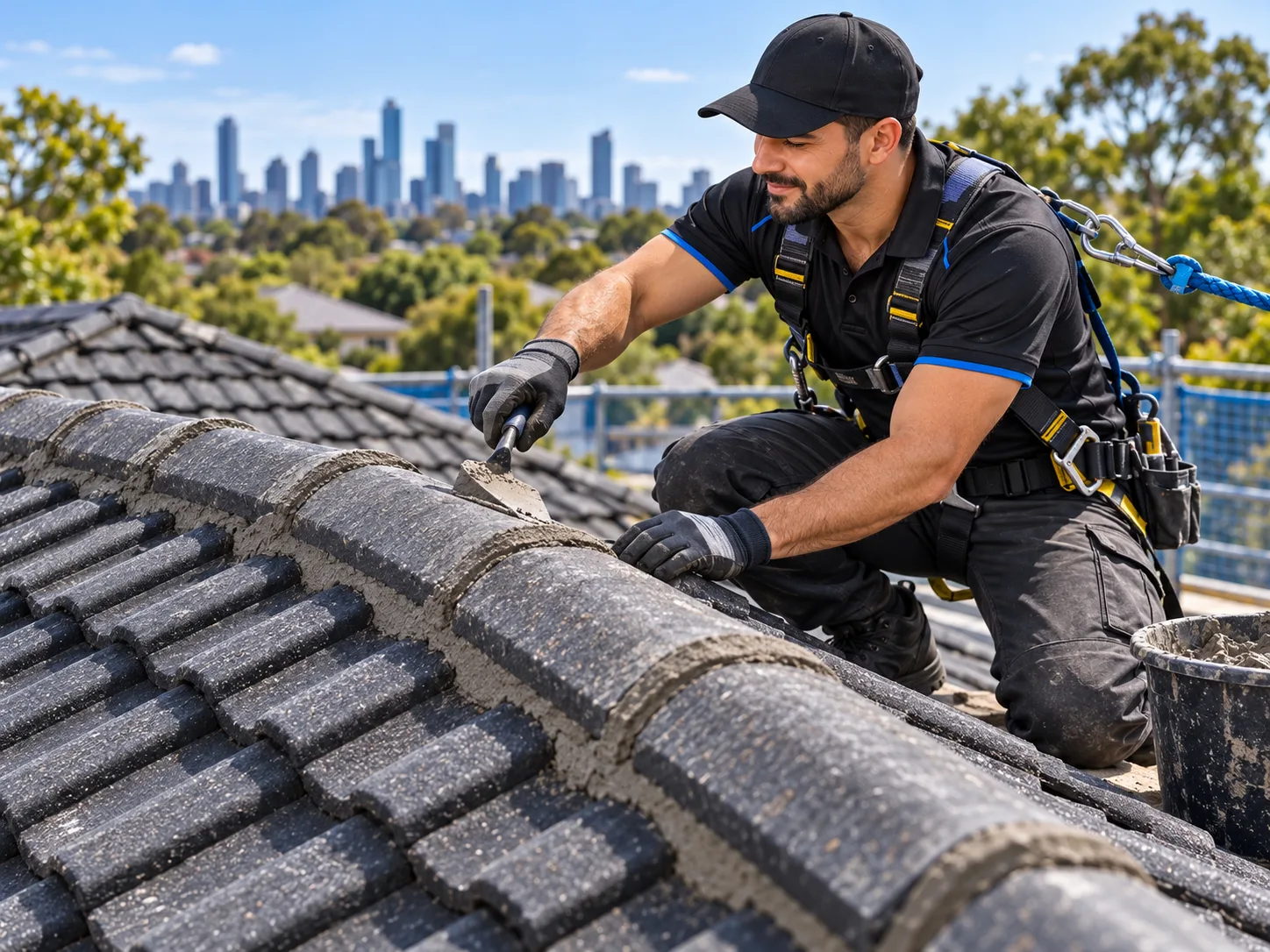
The waterproofing on a tiled roof is the ridge and hip system, the valleys, the flashings and a sound lap. The coating is the face. If the mortar has powdered — the usual storey on 1970s and 80s concrete in Doncaster, Box Hill and Glen Waverley — spraying colour first leaves the caps sitting on dust. The next hot week opens what the paint just hid. The first step is to cut out the failed bed, re-bed the caps and point them so the joint is a joint again. A flexible system or a mortar point is a specification, not a smear. Until that is done, coating is the wrong product to open the job with.
Homeowners meet this as a cheap “restoration” that looked even for one summer. The south pitch, which stays wet, shows the peel first. The north pitch, which cooks, shows the crack at the hip. Both were predictable on the day the coat went over untouched pointing. Roof Revival Melbourne will quote the ridges in the same scope as any finish. If a quote cannot say re-bed and repoint in writing, it is not yet a restore. The job we mean lives on tile roof restoration in Melbourne.
Broken and soft tiles are not a colour problem
A coating will not bridge a crack in a useful way, and it will not turn a crumbling unit back into a tile. The first step, when the neighbours are hard, is to swap the broken pieces and keep going toward a restore. The first step, when the piece in your hand powders, is to stop talking about coating at all. We use a simple test on the roof: does this unit still have a body? Scattered breaks with a sound field belong in the allowance. A field of soft units belongs in a replacement conversation. Painting them so the auction photos look calm is how buyers inherit the real invoice.
Previous coats complicate the test. A thick skin can hide pits, and it can be the only thing holding a friable face together. We look at edges and at any unit we lift. If the coat is masking a finished tile, another coat is the wrong first step and the wrong second step. Replacement on a standard home commonly starts around $20,000. That number is for planning beside the restore band, not a reason to strip a hard roof. The decision is the body, then the money.
Dirt, chalk and moss are prep, and prep is not optional
Even a hard tile with sound ridges will throw a coat off if the face is dust, chalk or a green film. Eastern concrete chalks as the original surface wears. South slopes hold moss. Western dust binds into a fresh film and sands it. The first step on that roof is a proper prep done as part of the trade job, so the specified system has something to hold. We are not writing a weekend coating guide. Owners who film a dirty tile lock the dirt in, and the failure looks like “the paint was bad” when the order of work was bad.
Prep is also not the whole restore. A beautifully cleaned roof with open hips is a clean leak. We see quotes that lead with a wash-and-coat price and mention bedding as “if required”. On this housing stock it is required until the inspect proves it is not. Put the mechanical lines above the coating line. A standard restore — ridges, swaps, prep, specified coating — often sits around $4,000–$12,000. A figure that only makes sense as spray hire is telling you the first step they intend to take.
Valleys and flashings do not take paint as a repair
A holed valley, a split apron, a skylight tray that has dropped: coating the tiles around them leaves the fitting wet. The first step is the metal. Sometimes that metal work plus a few tiles is a repair, and a full restore would be the wrong escalation. Sometimes the valley is one item inside a restore because the ridges have failed as well. Order still applies. You do not coat to the edge of a rusty valley and hope the overspray sealed it. We list the fittings. If they are sound, we say sound. If they are not, they are in the scope before the finish.
When coating is the right later step
Coating earns its place when the body is hard, the broken units are swapped, the ridges and hips are re-bedded, the valleys and flashings are either sound or repaired, and the face has been prepped for the system we named. Then the coat is the finish on a roof that can use one. It is how a chalked concrete field in the east gets a decade-plus conversation instead of a two-summer colour. The product has to suit the tile. A heavy film on a glazed terracotta that wanted a lighter hand is still the wrong step, just later. Specification is part of doing it at the right time.
Warranties follow that order. A coating warranty does not cover a bed that was never reset or a tile that was already finished. We would rather decline the coat than attach paper to a weak substrate. If you already had a coat-first job and it is peeling, the next visit starts with what was skipped, not with a second film over the first. Send suburb, storeys and two photos. Roof Revival Melbourne will say whether coating is step four or whether it should not be on the page at all.
Typical order when a restore is real
- 1. Inspect body, ridges, valleys and the roof space
- 2. Swap broken units that still have sound neighbours
- 3. Re-bed and repoint, and repair failed flashings
- 4. Prep the face for the specified system
- 5. Coat only if those steps left a roof worth coating