Key takeaways
- A roofer who prices an inner-north terrace like a driveway hip will miss the day.
- Inner-north streets were built for people on foot, then filled with cars.
- The usual wet details on this housing are old and local.
General guidance for Melbourne roofs. The written scope after an assessment decides the work.

The short version
A roofer who prices an inner-north terrace like a driveway hip will miss the day. Fitzroy, Carlton, Collingwood, Clifton Hill, Brunswick, Northcote and Thornbury share a building pattern: long thin roofs, shared walls, little or no side setback, and a rear lane that may be the only way onto the lid. The leak that brought you to the phone is often one joint. The work that makes the joint reachable is the rest of the scope. Roof Revival Melbourne treats access as a line item, then names the wet path. The repair service is roof repairs in Melbourne.
What belongs on that list is concrete. How we get up. Whose wall the flashing sits on. Which detail is actually open: parapet coping, box gutter, valley iron, chimney saddle, or the soaker where your roof meets the neighbour. A small allowance for cracked units. A note if the ridges are powdering along the whole run, because that is a different product from a local repair. Photos of the path, the access, and the ceiling stain, so the quote can be read without us in the room.
Terrace access is the first scope line
Inner-north streets were built for people on foot, then filled with cars. A two-storey terrace on a five-metre frontage often has no side path. The front door opens onto the footpath. The back opens onto a lane that a van may not enter, or a lane that is already parked out by bins and a neighbour’s roller door. Materials for three tiles and a flashing still have to reach the roof. Sometimes they go through the house. Sometimes they go up a scaffold on the street face. Sometimes the only standing room is a rear skillion that a previous owner added in corrugated iron.
That is why a short repair can occupy a crew for a day. The tile count looks small on paper. The setup does not. A quote that says “replace slipped tiles” and stays silent on scaffold, lane, and protection of the garden or the solar array is a quote that will move on the morning of the job. We would rather the access be boring and written. If a ladder truly reaches a low rear apron, we say ladder. If the street face or the party-wall hip needs height, we say height. The terrace access piece walks the same problem from the quote side. This page is what roofers should put on the list before they talk about coatings.
Neighbours matter here in a practical way. A shared lane, a party wall, or a roof that cannot be worked without a foot on the next title needs a conversation before the day, not a surprise at 7am. Access that stops because nobody knocked is a failed scope, even if the flashing was specified correctly. We note who we need to speak to. We do not assume the terrace next door is part of the job.
What to scope once someone is on the roof
The usual wet details on this housing are old and local. Parapets hold a box gutter you cannot see from the nature strip. Valley irons sit in the crotch of an L-shaped plan or where a rear addition meets the original hip. Chimney stacks on Victorian and Edwardian terraces move, and the saddle that dresses them opens. Party-wall soakers and cover flashings fail quietly and show up in a bedroom that does not sit under the worst of the tiles. Each of those is a repair when the tile or slate body is still sound. Each of them should be named, photographed, and separated from “the roof looks old”.
A scope that only says “repair leak” is not a scope. Ask which bay, which joint, and what metal or mortar is being renewed. Ask what happens to the tiles that have to come off to reach that joint, and whether they go back or get replaced with a matching unit. Inner-north stock is often terracotta or slate, sometimes a later concrete tile on a rear wing. Matching is part of the repair. A random modern tile on a street face is a second problem. We list the allowance. If the field crumbles in the hand, we stop calling it a local repair and say so on the same visit.
Gutters on these houses are easy to confuse with the leak. A valley or box gutter full of plane-tree litter can overflow onto a sound roof. Emptying it is maintenance. A rusted sole, a gutter with no fall, or water returning under the tile edge is a repair and belongs in the writing. We separate those two sentences so you are not sold a reline for a leaf problem, or a clean for a hole. Overflow that stains a cornice and a true roof path are different jobs; the ceiling photo does not decide which one you have until someone is above it.
Party walls, additions, and the stain that misleads
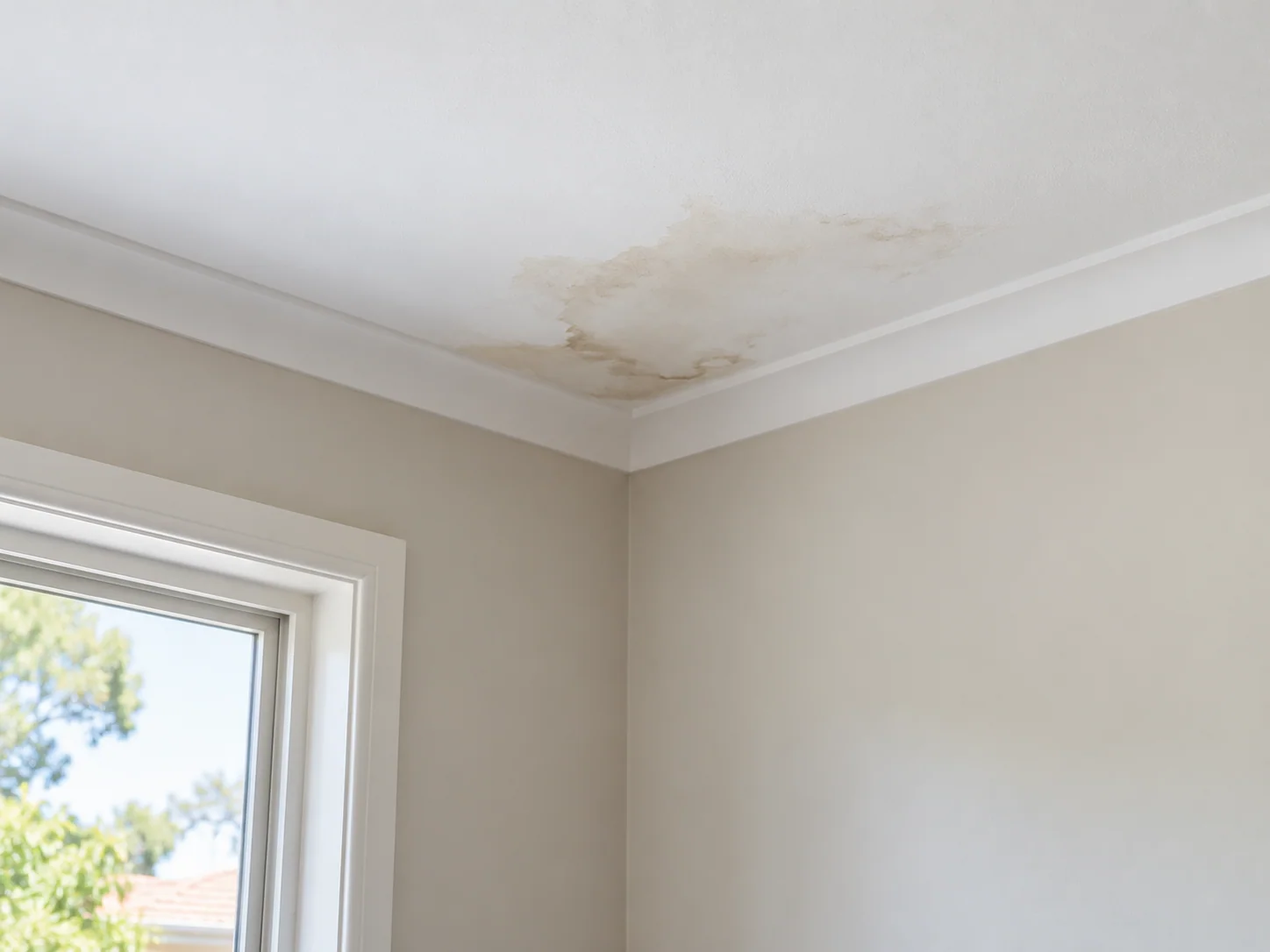
Water on a terrace travels sideways before it drips. It can enter on your side of the party wall and appear in the neighbour’s ceiling, or the reverse. It can run along a batten from a failed valley and mark a room two metres away from the iron. Owners then ask for the whole field to be coated because the stain is wide. The wide stain is often one path with a long trip. Roof Revival Melbourne traces the trip. The quote says which roof owns the opening. Guessing spends the day on the wrong title.
Rear additions complicate the map. A Victorian front with a 1980s skillion, a flat roof over a bathroom, or a box gutter where two ages meet is normal from Carlton through Thornbury. The original tiles can be fine while the junction is not. The scope should split the original lid from the addition. One flashing and a short run of iron is a repair. A skillion whose sheets have rusted through at the laps is its own line. Bundling them into “restore the terrace” hides which part is actually wet and which part still has life.
Solar on a tight roof changes the walking room. Panels over the only safe bay mean the leak under them cannot be pretended away. We sequence a lift when the path is under the array, and we say so before you sign. A quote that skips the bay because the panels were awkward is how the same stain returns next winter. Living in the house during the work is usual on these streets. We say what comes through the hallway and what stays in the lane.
Repair, restore, and the point where the field is finished
Three products get mixed up because the houses look similar from the footpath. A repair closes the path that is wet: the saddle, the valley, the soaker, the cracked units around that joint, and the access required to do it. A restoration is a system for a tiled roof whose body is still hard and whose ridges, hips and face need doing together. On a standard home that system is planned around $4,000–$12,000, moving with squares, storeys and how much ridge is actually open. A replacement, when the tile, slate, battens or sarking are finished, is commonly planned from about $20,000. None of those figures is a price read off the suburb name.
Inner-north roofs earn the repair more often than the brochure suggests. The street face can look tired because the pointing is powder and the chimney is dark, while the units themselves still ring when tapped. That is a detail repair, or a restore if the ridges have opened along the run. It becomes a replacement when units snap across the field or the underlay has perished and the timbers are wet. We will not climb a Fitzroy terrace, see one open saddle, and invoice a new roof because the brick is old. We also will not coat a finished field because a restore is what the calendar wanted.
Heritage overlays sit on a lot of this stock, especially in Fitzroy and Carlton. A repair that puts the same profile back is the usual conversation. A change of material on a street face is a different conversation, and it is a planning one as well as a roofing one. We write the roof work. We do not hide a metal swap inside a repair line. If the overlay is the thing you are worried about, say so when you send the photos. The inspect still starts with the leak and the access.
What a proper inner-north quote shows you
You should be able to read the page without a site meeting. Suburb and street type. Storeys. How we reach the roof. The detail that is wet, with a photo. What is being replaced and what is being reset. A tile or slate allowance. Whether the neighbour’s wall is involved. What is explicitly left alone, including a sound field that does not need a coating. If ridges are open across the roof, a separate sentence that says restore, with the reason. If the body is finished, a sentence that says replace, with the photo that proves it.
Send the ceiling stain, a shot from the lane if you can take one safely, and the front of the house so we can see the parapet and the frontage. Do not walk a steep slate or a parapet gutter to get the photo. Roof Revival Melbourne would rather inspect than have you become the access method. Two photos and the suburb are enough to book. The scope is written after someone is on the roof, not from the footpath and a guess.
Typical inspect-to-scope process
- 1. Confirm street type, storeys, lane and any shared wall
- 2. Inspect the wet detail and the roof space where it is safe
- 3. Photograph access, the joint, and the ceiling path
- 4. Write the repair — or restore or replace if the field says so
- 5. Book the method that matches the terrace, then handover photos