Key takeaways
- Repair and restore are different jobs that share a ladder and a suburb.
- A repair is local. One valley iron has rusted through on an otherwise tight concrete roof in Glen Waverley.
- A restore belongs to a roof whose waterproofing has tired as a system and whose covering has not.
General guidance for Melbourne roofs. The written scope after an assessment decides the work.

The sort starts on the roof
Repair and restore are different jobs that share a ladder and a suburb. Homeowners hear both words in the same week, often attached to very different totals, and assume the cheaper word is the thriftier version of the same work. It is not. A repair stops at a fault you can point at. A restore resets the parts of a tiled roof that have failed together, then finishes the face. Roof Revival Melbourne will name one of those after the walk. We will not let a driveway conversation pick the word because it sounds smaller.
The job, when the finding is a system and the tile still has a body, is roof restoration in Melbourne. This page is the sorting, not the invoice. A standard restore on many Melbourne tile roofs is planned around $4,000–$12,000. A local repair often sits under that band. Replacement, when the field is finished, commonly starts around $20,000. Those figures are planning bands. They do not choose the job. The roof chooses the job. The written scope is what you pay.
A repair has an edge
A repair is local. One valley iron has rusted through on an otherwise tight concrete roof in Glen Waverley. A dozen tiles have cracked on a north pitch after a hail cell, and the ridges are still hard. A chimney flashing has opened on a Preston Edwardian while the field around it is doing its work. A gutter outlet has been pouring into the eaves and the tiles above it are innocent. Each of those has an edge. You can draw a line around the work and leave the rest of the lid alone without pretending the rest of the lid is fine. It is fine. Touching it would be selling a larger job than the roof asked for.
Local does not mean trivial, and it does not mean a five-minute call-out dressed up as a scope. A valley replacement is still metal, still laps, still the tiles that have to come off and go back in the right order. A flashing repair at a two-storey chimney in Doncaster is still access. A short ridge repair, where only one hip has opened and the others are sound, is still a re-bed of that hip, not a smear of mortar over powder. The edge is what keeps it a repair. If we cannot draw the edge because the same failure is on every hip, the word changes.
We also refuse the repair that is really a delay. Bedding a single cracked cap on a roof whose pointing is dust from the street is a repair in the sentence and a return visit in the rain. Roof Revival Melbourne would rather say the hips are a restore, or a defined ridge scope, than sell a patch that we already know will not hold the next winter. The honest small job is the one whose neighbours on the same roof are still working.
A restore is the system, on a field that still has life
A restore belongs to a roof whose waterproofing has tired as a system and whose covering has not. On Melbourne concrete tile from the 1970s and 1980s, that usually means ridge and hip mortar that has powdered, a scatter of broken or slipped units, and a face that has chalked in the eastern sun. The tile, turned in the hand, is still dense. The sarking, where a slipped unit lets you see it, is dry. The battens are not compost. That roof will leak again if you only chase the ceiling stain. It does not need a new covering because the old one has gone soft. It needs the mechanical work, then a coating specified for that tile.
The order matters as much as the list. Broken units are swapped. Ridges are re-bedded and repointed, with the failed bed cut out rather than painted over. Valleys and flashings are in the scope if they have failed, and named as excluded if they have not. The face is prepared, then coated. A quote that jumps to colour because the booking is Thursday has skipped the part that keeps water out. Paint is a finish. We will paint a sound roof when the repairs are already done or genuinely not needed. We will not call a spray a restore so the invoice can borrow a larger word.
Terracotta in Camberwell, Kew or Hawthorn can be the same sort with a stricter material conversation. The body may be sound while the bedding is gone and a generation of cement repairs has cracked off. A restore there is still ridges, replacements and a finish that suits the glaze, not a heavy film chosen from a colour card. If the units are soft, or the breaks are no longer a scatter, the sort moves again. A restore on a finished field is a waste of the coating and of the money. That decision is a different article. This one stops at the line between a local fault and a tired system that can still be kept.
How the walk actually sorts them
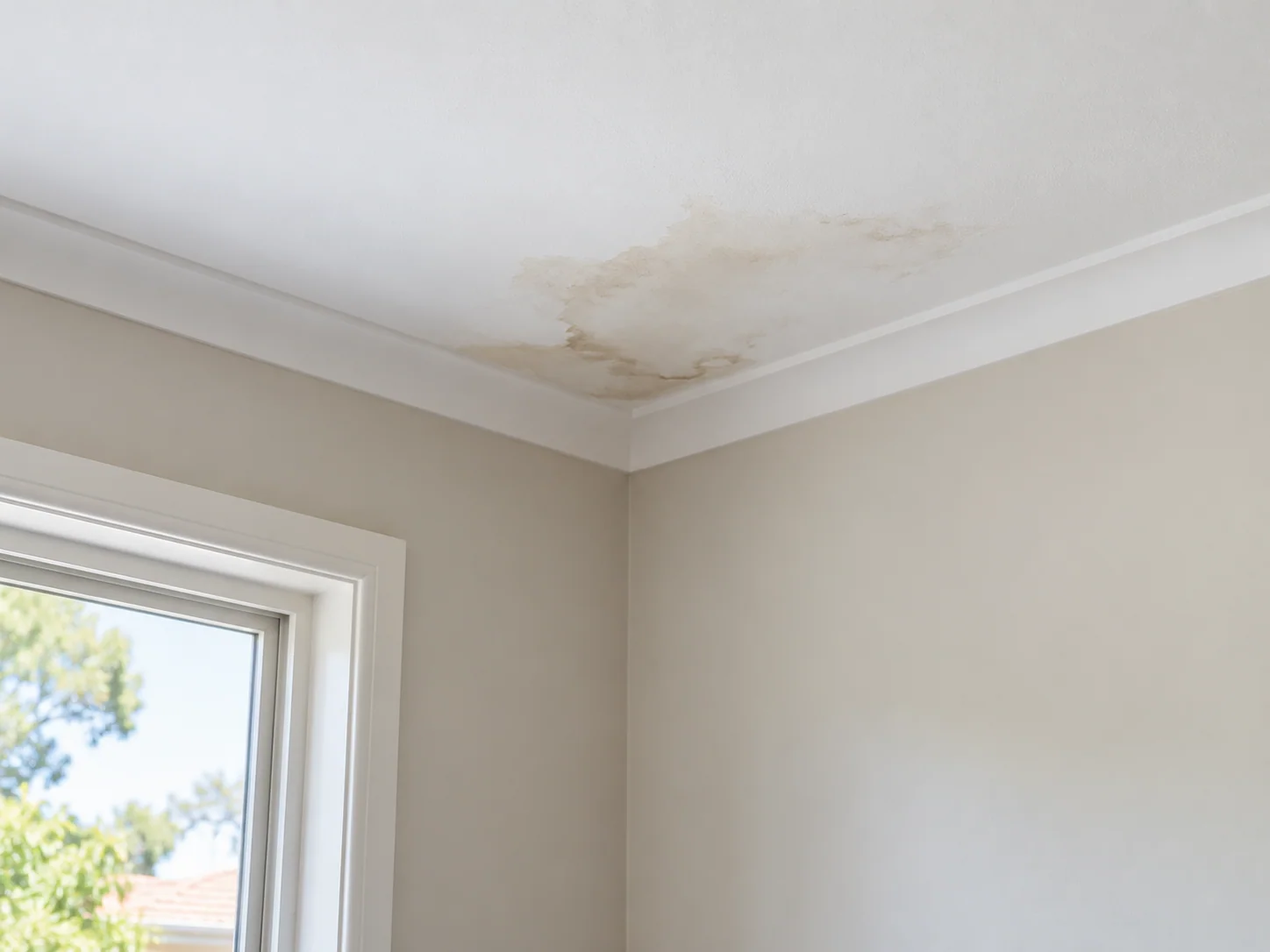
We look at the ceiling stain first so we know which room is complaining, then we get on the roof and into the roof space. The stain is a clue. It is not the scope. Water travels along battens, sarking and rafters, and it shows up somewhere convenient. A mark in a Glen Waverley passage can be a hip three metres away. A mark beside a Box Hill skylight can be the skylight, or the valley that shares the same corner. Sorting repair from restore means finding the path, then asking whether that path is the only tired thing on the roof.
On the roof we check every ridge and hip, not the one you can see from the driveway. We count broken and slipped units and we look at whether the breaks are a handful or a habit. We look at valleys, aprons, and any previous cement that is already letting go. In the roof space we look for wet sarking, daylight, and timber that has started to go. A dry space under a powdered ridge can still be a restore, because the next wet winter is the leak you have not had yet. A soaked space under one failed flashing can still be a repair, if the rest of the field is tight. The photos are part of the sort. A sentence without a photo is a preference.
Access is part of the sort as well. A two-storey hip in Doncaster or a terrace with a rear lane does not change a repair into a restore, but it changes whether the small job is still the sensible visit. If the only safe way onto the roof is scaffold, and the ridges are already due, we will say so. Combining the local fault with the ridge work can be the honest scope. Inventing a full restore because the scaffold is annoying is not. The page should show which lines exist because of the roof and which exist because of how we reach it.
Melbourne weather keeps the categories honest
Eastern summers cook mortar. Winter wet opens whatever the summer powdered. South pitches in Mount Waverley and Glen Waverley hold leaf and moss, and a coat on that dirt peels. Hail along the Box Hill–Doncaster–Ringwood path cracks units that were sound at the last restore. Bayside salt works on flashings and pointing faster than an inland brick veneer. None of that is a reason to restore every roof that has had a storm, and none of it is a reason to keep repairing a system that has already failed on every hip. The weather tells you which failure you are looking at. It does not pick the product.
A spring leak after a dry autumn is often the ridge that powdered last February and finally took water in June. That is a restore conversation if the other hips match. A leak the morning after a single slipped tile is a repair if the neighbours of that tile are seated and the pointing is still there. Owners sometimes want the larger word because a neighbour had a restore, or the smaller word because a leaflet named a number. The neighbour’s roof is not this roof. The leaflet did not walk this hip. We sort the one we are standing on.
Previous work changes the sort too. A roof that was “restored” two summers ago and is peeling, with the original powder still under the colour, was painted. The sort now might be a real restore, if the tile body survived, or a replace, if the field was already finished and the paint hid it. A roof with one careful valley repair from a few years ago, and sound ridges, stays a repair roof until the ridges say otherwise. We read the old work. We do not average it into a new label.
The word on the quote has to match the finding
Once the sort is made, the quote should be boringly specific. A repair names the valley, the flashing, the tiles, or the hip, and it says the rest is left. A restore names re-bed and repoint, the tile allowance, the prep, the coating system, and what is excluded. If a document says “restore” and the lines are a wash and two coats, you are holding a paint quote. If a document says “repair” and the lines quietly include every ridge, every valley and a full coat, you are holding a restore under a small word, which can be fine if the roof needs it and dishonest if the roof does not. Read the lines. The heading is advertising. The lines are the job.
Roof Revival Melbourne writes the finding in a sentence before the price. “Flashing at the south chimney, field and ridges sound.” “Hips powdered, tile body hard, sarking dry, restore.” You should be able to disagree with the sentence because you can see the photos. You should not have to guess which product the number belongs to. Partial work, a ridge run and a dozen tiles, can be the right spend on a roof that is only partly tired. A full restore at the top of the planning band on a large, steep, two-storey roof is still a different product from a re-roof. We do not blur them to make a meeting shorter.
If you already have both words on two quotes, put the sentences next to each other before you compare dollars. A repair quote and a restore quote are allowed to disagree. They are not the same offer with a personality difference. Ask each company what they saw and chose not to include. The one who can point at sound hips, or at powder on all of them, has been on the roof. The one who can only repeat the word has not sorted anything.
What we will not sort from the footpath
Photos from the ground help us book the right visit. They do not finish the sort. A drone shot of a ridge, a ceiling stain, and the suburb will tell us whether to bring valley metal or just eyes. They will not tell us whether the tile body is hard, whether the far hip matches the near one, or whether the sarking is wet. Anyone who restores or repairs your roof from the nature strip is guessing, and a guess can be labelled as a budget. It should not be labelled as the job.
We also will not hand you a method for doing either job yourself. Lifting tiles, cutting out beds and coating a face are trade work, and a weekend attempt is how a repair roof becomes a leaked roof with a new set of cracks. Send the suburb, the storeys, and where the water showed. We will say whether the first visit is likely to land on a local repair or a restore, and we will confirm it on the roof before anyone signs. The sort is the visit. The word comes after we have earned it.
Typical inspect-to-scope process
- 1. Read the stain, then walk the roof and the roof space
- 2. Draw an edge around the fault, or say the system has failed
- 3. Check the tile body and the timber before calling it a restore
- 4. Write the sentence, then the lines that match it
- 5. Quote the repair or the restore, with exclusions visible