Key takeaways
- Fitzroy overlays exist because the terraces, the slate, the terracotta and the street walls are the place.
- Matching units. On slate, that means a slate of a similar size and thickness, fixed so it sits in the existing courses, not a tile dropped into a hole.
- Changing the material of the roof people see from the street.
General guidance for Melbourne roofs. The written scope after an assessment decides the work.

The short version
Fitzroy overlays exist because the terraces, the slate, the terracotta and the street walls are the place. They are not a ban on fixing a leak. A slipped slate, a cracked terracotta unit, a tired soaker on the party wall, a rusted valley, a parapet flashing that has pulled out: those are repairs, done by putting the same kind of thing back. The repair service is roof repairs in Melbourne. What the overlay makes you slow down for is a swap the footpath would notice. Slate to metal. Terracotta to a modern profile. A street face that quietly becomes Colorbond because the quote was easier that way.
We are roofers, not the planning authority. We do not issue permits and we do not promise that a particular house is exempt. We describe the work in two columns. Like-for-like repair of the roof that is there. Material change, which you check against the scheme, and which we will not bury inside a line called “make good”. If you already know the consent position, tell us. If you do not, the repair of the leak can still be scoped while that question is open.
What a like-for-like repair includes
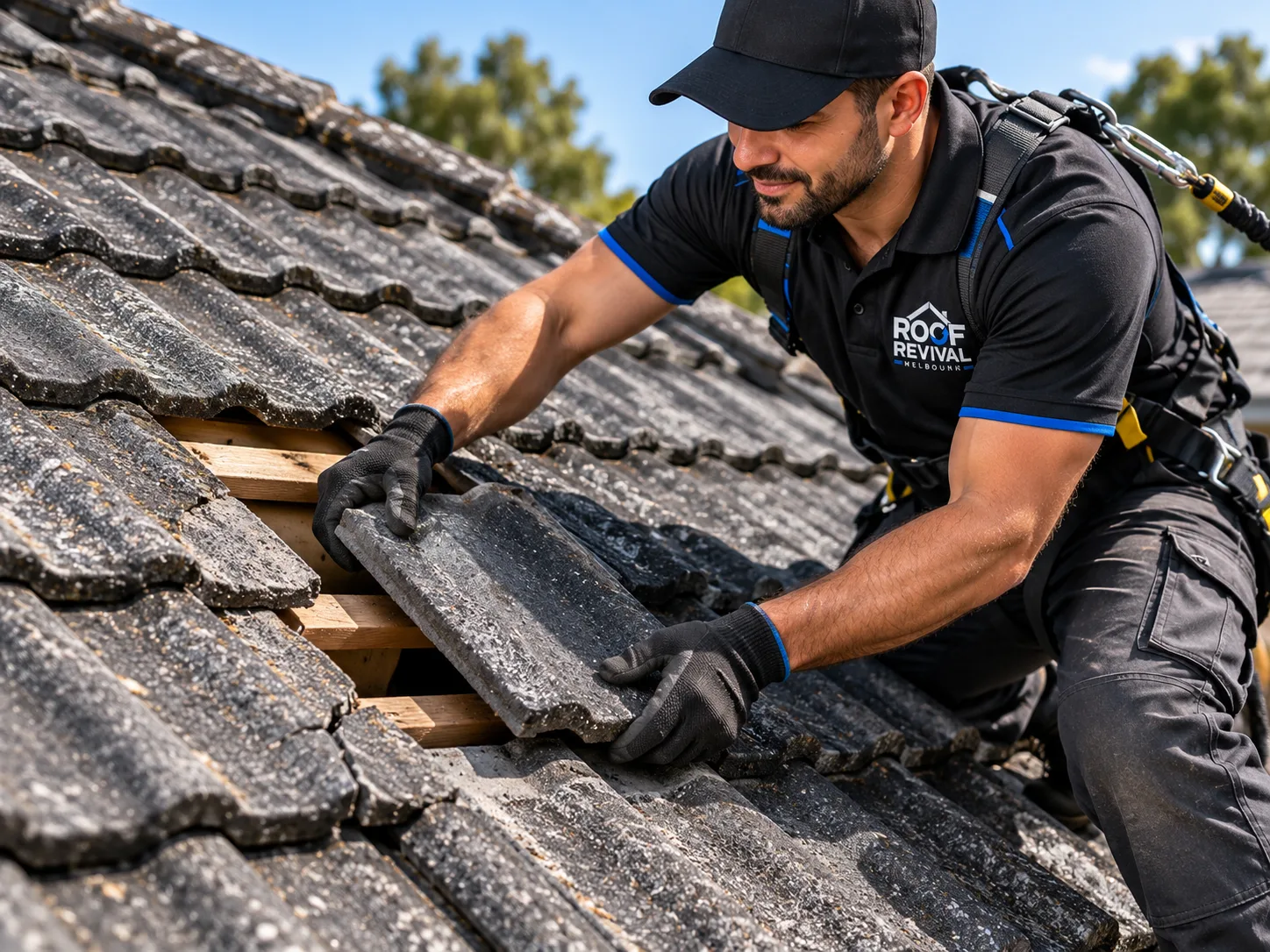
Matching units. On slate, that means a slate of a similar size and thickness, fixed so it sits in the existing courses, not a tile dropped into a hole. On terracotta, it means a profile that belongs on that roof, not the closest concrete tile on the truck. The allowance should be a number, with a note that Fitzroy fronts are seen. A repair that saves money by speckling the street face with odd units has created a second defect. We would rather the allowance be honest.
Metal that is not the covering. Flashings, soakers, saddles, valley irons and box-gutter sections wear out while the slate or tile still has life. Replacing that metal is how the leak stops. It is also the work people confuse with “replacing the roof”. It is not. The covering stays. The joint that was open is renewed and dressed back into the units. Bedding and pointing on a ridge that has failed beside the leak can be part of the same repair if the failure is local. If every ridge on the roof has opened and the units are still sound, say so: that is edging into a restoration, planned around $4,000–$12,000 on a standard home, still in the original material.
Rear roofs deserve their own line. Many Fitzroy terraces have a later skillion in corrugated iron over a kitchen or bathroom. That iron can be replaced as iron without pretending it is the street-face slate. The junction where the skillion meets the original roof is often the leak. Scope the junction. Do not let a rusted rear sheet become an argument for stripping the front.
What is not an ordinary repair
Changing the material of the roof people see from the street. That is the sentence to keep separate. A finished slate roof that can no longer be repaired in slate is a real problem, and the answer is not a quiet metal lid assumed to be maintenance. Overlays and streetscape controls are how councils keep a row reading as a row. Whether your house needs a permit, a like-for-like exemption, or something in between is a question for the planning scheme and, where you need it, a heritage adviser. Roof Revival Melbourne will tell you the roof is finished if the units and the sarking say so. We will also tell you that the next covering is a planning conversation, not a colour chart we pick on the day.
The same caution applies to a “restore” that is really a coating system invented for concrete tile, rolled onto slate or a glazed terracotta that did not ask for it. Like-for-like can include bedding and sound units. It does not include a film that changes how the street face weathers. If a coating is proposed, the scope should say what it is going on and why that surface can take it. If it cannot, we leave it off. The notes in when a council blocks Colorbond and matching heritage profiles are the longer versions of those two refusals. This page is the repair list.
Replacement, when it is genuinely required, commonly starts from about $20,000 because it is a new roof, and on a Fitzroy terrace the access and the material still sit on top of that planning band. A figure without a method, and without a sentence on the overlay, is not a heritage-aware quote. It is a roof quote that hopes the street will not mind.
How the leak and the overlay meet
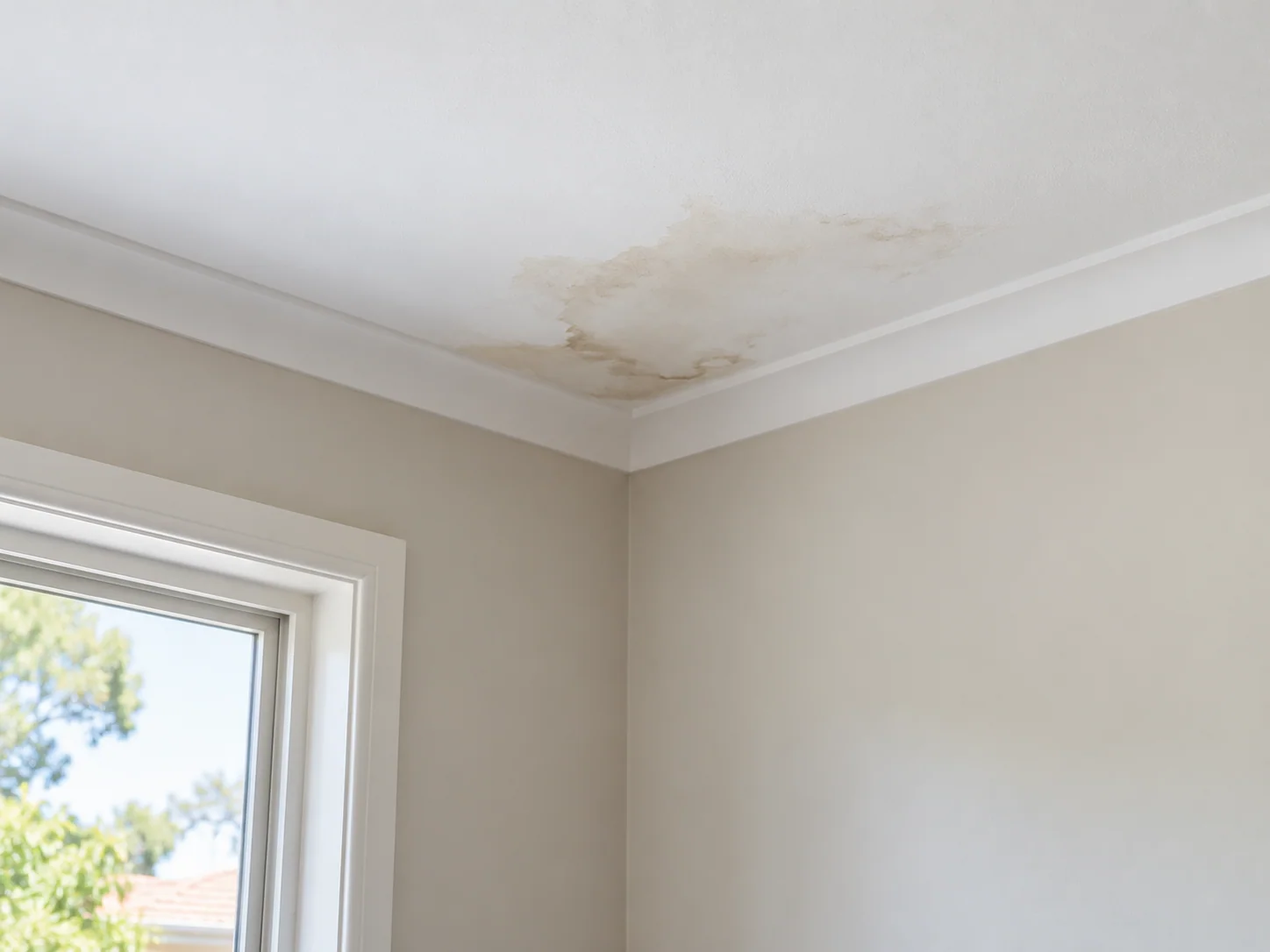
Most calls start with water, not with the planning scheme. The water is at a party wall, a parapet gutter, a chimney, or a valley. Fixing that path with matching units and new metal is the repair owners are allowed to want, and it is the repair we scope. The overlay does not make a slipped slate unrepairable. It makes a careless replacement visible. We photograph the units we take off and the units we put back so you can see the match. We photograph the flashing. You should be able to show a neighbour, or a buyer, what changed.
Access on these terraces is its own constraint. Lanes, no side setback, scaffold at the street. None of that is a reason to switch materials “while we are up there”. It is a reason the like-for-like repair needs a method written down: how matching slates get onto the roof, how waste gets off, whose wall we are dressing. A day rate that discovers the overlay when the old slate is already in the lane is too late. Say the overlay when you book. We will still find the leak first.
What we will not write
We will not write that a permit is unnecessary because the job is small. Small jobs can still change appearance, and appearance is the point of many overlays. We will not write that a permit is always required for replacing a broken slate with a slate. That overclaims in the other direction. The practical split we will defend is the one in the scope: same material, same profile, failed metal renewed, street face left as a street face. Anything that leaves that split is flagged for you to confirm before we treat it as booked work.
We will not invent a Fitzroy legal fee or a permit price. Those are not our invoice. Our invoice is the roof: the units, the metal, the bedding, the access. If the field is sound, that invoice is a repair. If the ridges and the face need a system and the units survive, it can be a restore in the original material. If the units are finished, we say replacement and we say the overlay in the same paragraph. You should never have to infer it.
What to send with the booking
The front of the terrace, the ceiling stain, and any words you already have: slate, terracotta, overlay, party wall. If a planning property report mentions a heritage overlay, say so. You do not need to interpret it. Two ground-level photos are enough. Do not walk a steep slate to prove the leak. Roof Revival Melbourne will inspect, list what can be replaced like for like, and separate any material change so it cannot hide in the repair. The row stays a row. The ceiling gets a path that has been closed.
Typical inspect-to-scope process
- 1. Note the overlay as a fact, without pretending to grant consent
- 2. Find the leak: flashing, valley, parapet, chimney or slipped units
- 3. List like-for-like replacements and the metal being renewed
- 4. Flag any material change as a planning question, not a repair line
- 5. Repair the path, with photos of the match